By Irene Gaitirira
Published August 13, 2017
 Kenyan security forces should exercise restraint in the face of protests that take place in response to the disputed Presidential election results.
Human Rights Watch and Amnesty International call for restraint in the use of arms in quelling protests and immediate investigation of claims that police are shooting people, including children.
This comes at a time that local news media are being accused of failing to give coverage to protesting citizens and the violence being meted out to them by police. Kenyans are relying on social media like Twitter and Facebook and international news media such as BBC, Al Jazeera, The Guardian to keep abreast of developments in trouble spots.
RELATED:Kenya’s Culture of Dishonesty to Blame for Post-Election Violence
Reuters news agency quotes opposition National Super Alliance (NASA) coalition as saying that “more than 100 people, including 10 children,” have so far been killed by police.
Though Kenya National Commission on Human Rights says 24 people had been shot dead by police, Reuters says it has confirmed that 11 people, including a girl, have been killed by police.

Saying that “Amnesty International has received credible information that one man was shot dead by police in Nairobi’s Kibera slums and at least two others in Kisumu’s Kondele area, while others were injured. There were also confrontations between police and protesters in Mathare and Kariobangi, both in Nairobi,” Lynne Muthoni Wanyeki, Amnesty International’s Regional Director for East Africa, the Horn and the Great Lakes, says “Police must do everything necessary to protect life in these protests. They should prioritize dialogue and de-escalation, and only use force and firearms if all peaceful means fail, and only where necessary to protect life.”
RELATED:The Role of Academics in Remembering and Dismembering Kenya
“In any situations where security force personnel use force,” Human Rights Watch says, “they should take care to ensure that it is proportionate.”
 The declaration of Uhuru Kenyatta of Jubilee party by Kenya’s Independent Electoral and Boundaries Commission as having won a hotly contested Presidential poll on August 11, 2017 led to protests in some opposition National Super Alliance (NASA) strongholds, particularly Kisumu in western Kenya, parts of the country’s capital of Nairobi, and Mombasa on the Indian Ocean coast.
“It is important for security forces to work to deescalate – not escalate – the violence,” says Otsieno Namwaya, Africa researcher at Human Rights Watch. “The police should not use teargas or live ammunition simply because they consider a gathering unlawful.”
“As a riot-control method,” Namways says, “teargas should be used only when necessary as a proportionate response to quell violence.”
Saying teargas should not be used in a confined space and that canisters should not be fired directly at anyone, Human Rights Watch contends that “International guidelines, such as the United Nations Principles on the Use of Force and Firearms, stipulate that the police are expected to use discretion in crowd control tactics to ensure a proportionate response to any threat of violence, and to avoid exacerbating the situation.”
RELATED:Russia Issues Travel Advisory to Kenya
Amnesty International calls upon Kenya’s Independent Policing and Oversight Authority (IPOA) to “immediately launch an independent and effective investigation into reported killings and where there is credible evidence of crimes, those responsible must be brought to justice.”
Both Wanyeki and Namwaya argue that ‘Everyone has a right to peaceful protest and they must not be hurt, injured or killed for exercising that right.’
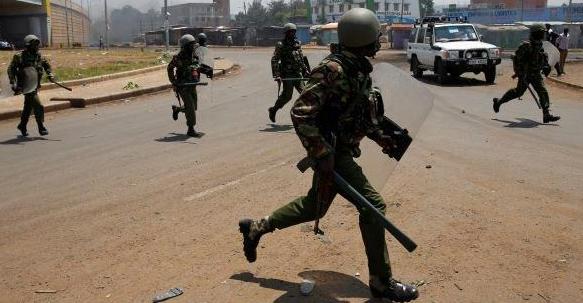
“Police must do everything necessary to protect life in these protests. They should prioritize dialogue and de-escalation, and only use force and firearms if all peaceful means fail, and only where necessary to protect life,” says Wanyeki.“Use of excessive and disproportionate force is forbidden under Kenyan and international law and must be avoided at all costs.”