By Ogova Ondego
Published May 21, 2008
 There can be no exaggeration in stating that Kenya is one of the most difficult countries to work in as a creative practitioner. In this highly capitalistic state which has overturned the biblical wisdom that it is more blessed to give than receive, it is more common to pay Sh1 million for a plate of food to support the re-election of politician Mwai Kibaki as President than to pay Sh300 to watch a play at Kenya National Theatre.
It is also easier here to contribute Sh10000 to the campaign kitty of a politician like Raila Odinga or Kalonzo Musyoka who probably have more money than they need than give Sh2000 to ArtMatters.Info that is documenting, highlighting and promoting creativity in eastern Africa for posterity. Again, it is more common here to hang out with Warembo na Kibaki (The Beautiful Ones with Kibaki or Beauty and Kibaki) for a Sh5000 (US$84) fee than be seen at a free Kwani? literary seminar.
In Kenya, culture is synonymous with traditional dances performed by children and women for politicians and tourists.
It was out of this scenario that players in the arts and culture sector in Kenya met with Africalia, a non-governmental Belgian organisation in Nairobi at a two-day brainstorming seminar “to get a clearer picture of the cultural situation” and “develop an understanding of the needs and priorities of the cultural a field of each country.”
RELATED:The Challenges of Organising Cultural Events and Festivals in East Africa
Africalia, that says it has over the years supported artistic and cultural programmes in 15 African countries, says it “is reviewing its modalities of co-operation with cultural operators in Africa in order to develop more structural partnerships in the near future.”
Besides taking a general analysis of the cultural and artistic sector in Nairobi by Frédéric Jacquemin guided by an outline of the conclusions which came out of the discussions of Africalia with the cultural partners and actors after visits in the field, Africalia financial coordinator Sven Molet took the gathering through financial preparation and reporting. The seminar concluded with public presentation of the outcomes of the thematic workshops.
What came out clearly was that for the arts to thrive, an enabling environment, guided by proper policy guidelines and regulations ought to be put in place.
RELATED: Healing through Art
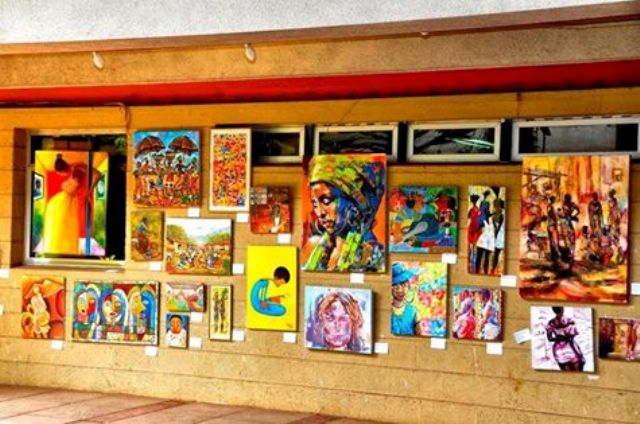
Meanwhile the Rahmtullah Museum of Modern Art (RaMoMA), that relocated from Rahmtullah Tower on Lower Upper Hill Road to a residential compound on 2nd Parklands Avenue in Nairobi, says it has diversified its arts programme as it now has ample space in its two-storey building bought and transformed by the Valdor Trust who donated it to it,
RaMoMA now has six galleries, a sculpture garden, a gift shop, a cafe, an amphitheatre, and ample parking space.
Besides housing the Pamoja Dance Company, RamoMA is now training children and adults in art.
The organisation has released its initial schedule of workshops for June and July 2008 and is asking interested parties to enroll for training in areas such as Clay and Mosaic Sculpture, Drawing in depth, multi media drawing,