By Judy Kibinge
Published January 7, 2010
This is a ‘right of reply’ response to the editor by filmmaker Judy Kibinge of Seven Productions on Kenyan Judy Kibinge’s Propaganda Film on Peace Falls Short of Expectation that ArtMatters.Info published on December 24, 2009.
I am writing about our latest documentary, Peace Wanted Alive, and a recently published ArtMatters.Info piece on it. I somehow doubt you have had a chance to watch the film because I doubt you would allow ArtMatters.Info online to publish a piece on it by someone who shockingly seems to have no idea about the difference between fiction and documentary film.
The first shocking thing about the piece is the critic’s total ignorance about the techniques of documentary film. Archive reconstructions are a huge part of documentary filmmaking anywhere in the world. Many award-winning documentary films globally use archive to piece together the past events. Archive doesn’t lie whereas reconstructions obviously can. What made Peace Wanted the most challenging piece of work we have ever done is the fact that it required us to find so much never-before-seen footage. We had to look not in only obvious archives like KTN TV and NTV, but also dig up young freelance filmmakers from the slum to present a never-before-seen reconstruction of what happened during the violence. This seems to totally have escaped the writer who mentions previous fictional films I’ve done and other naively praises them for being “better” unaware of the fact that comparing dramatic film with documentary film is like trying to compare oil with water or chalk with cheese.
RELATED: French Veterinarian and Theatre Director Turns to Filmmaking in Namibia
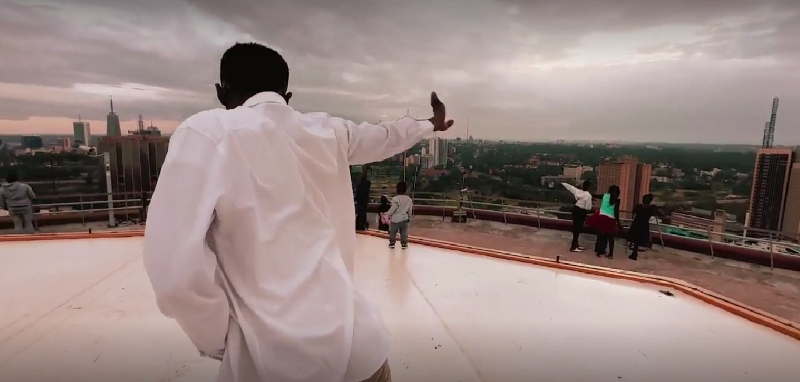
We at Seven Productions are absolutely astounded at the way the said article willfully discounts the eye-witness accounts of the seven selected protagonists based on the actions they took during the violence and also their roles as young community leaders. These protagonists came from all tribes and all live in the hot spots where violence peaked in Nairobi. Only one of them was a KIkuyu. The key point the film was making wasn’t their tribe or who they supported but what they did and continue to do for their communities before, during and after the violence. The writer seems to be demanding that we bend or twist the truth as we record it to suit her imaginary version of events.
Propaganda is what she called the film, but Propaganda is actually what she would have had us produce.
The most worrying thing of all is the writer had an opportunity to interview all the protagonists at the film screening at Alliance Francaise in December 2009. If the writer is a serious critic or journalist, why didn’t they bother to speak with me personally after the screening to probe my techniques, or even better, interview these protagonists, almost all of whom were present during the Dunia Moja Human Rights screening which she stormed out of? Why didn’t they stick around to ask Solomon Miundo, Nick Omondi and Mohammed “Soundboy” Abubakar why they told me the stories they did and even more important, to ask them whether I had, indeed, coerced their accounts from them or not? I am still happy to give her the phone numbers of all the interviewees for her to have private interviews with all of them to ask them how I met them, how I conducted the interviews and so on. I hope she takes this offer up, because no true journalist would reject the opportunity to substantiate claims and choose not to.
RELATED: Zimbabwe-born Malawian Scientist Charles Shemu Joyah Dabbles in Award-Winning Art
I would appreciate it if you could forward these questions I have to her. I am very curious for the motivations she might have for such an ill-informed attack. I would also like a chance to not only write an article for ArtMatters.Info on the making of Peace Wanted Alive but perhaps even attach a link to the film, once it has been screened on TV, so that all readers are able to watch the film and judge it for themselves. If I am wrong and the article is right, then I am more than happy to let the readers and viewers decide for themselves… is the writer?