By Bamuturaki Musinguzi
Published October 9, 2013
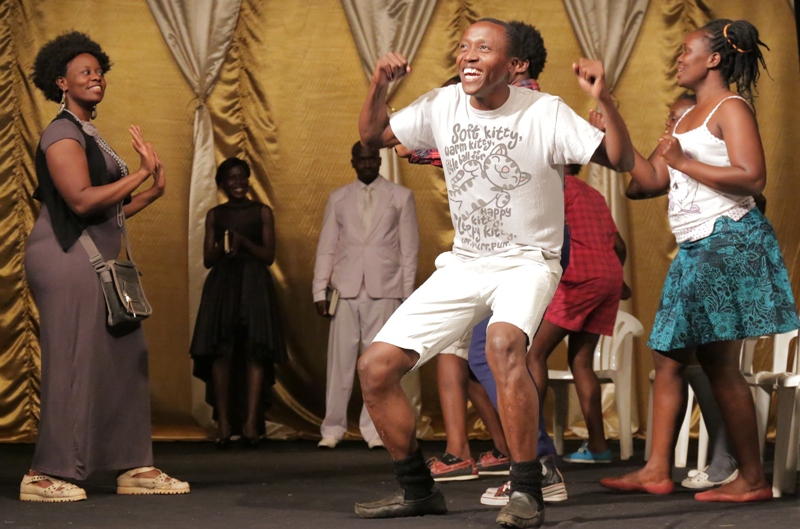
 They narrated their stories. All 10 of them. Clad in Jeans and T-Shirts. They at times seemed carried away by the emotions of the subjects they were presenting. Unless you were careful, you would have easily confused their art with rap music. But this was a genre of poetry known as spoken word.
Spoken Word Project’s Poetry Slam Competition had come to the Ugandan capital, Kampala, enabling the youthful artists to offer their commentary on a wide range of social ills like religious hypocrisy, racism, war, death, torture and crafty politicians.
For beating Natasha Emilly Nakke, Namulondo Rashida, Tinah P’Ochan, Maritza, Slam Poet Mark Gordon, Slim Emcee (UG) the Poet, Black Poet, Apio Winnie and Shan to the top most prize with her poem, A Traumatized Generation, Rehema Nanfuka will spend a week in Nairobi, Kenya in mid-October during Spoken Word Project’s poetry Slam Journey that is to be graced by eight African countries.
While Slim Emcee won second place with the poem, In the Moment, Maritza took third position with Speaking Out.
Nanfuka’s A Traumatized Generation is about a country recovering from war after bullets have been silenced by even more bullets. The narrator does not seem to notice the difference before and after the destructive war – because the social ills like cold blooded murder, human rights abuses and rigging of elections have not been eliminated even in the new political situation.
The war was like a tornado that swept through the land, leaving behind headless and limbless torsos as carcasses to be devoured by vultures. Those who survived buried the remains of their loved ones and then joined their liberators to rejoice in peace.
Songs of liberation became their lullabies and bedtime stories were narratives about cousins they will never see, for they were cut out of wombs for being rebels.
“So here we are: A traumatized generation/A boom of any kind leaves us with sweaty palms and quaky limbs/Our eyes witness to injustices all around us.
Gagged with a freedom to say anything we want, as long as it’s not everything we want/I tell mama of friends who were so ambitious they got scorched; she says that’s what you get for eyeing the top seat.
As we cast our ballots monitored by bullets/I tell mama my ambitious friend, he was found cold in a sugar cane plantation, a cadaver filled with bullet holes now and mama says at least he was killed in secret not like it was in the pastâ,” the poem reads.
“It feels great to win this competition mainly because I am not big on the spoken word scene in Uganda. Besides, poetry slam is still in its infancy compared to poetry that has been around for long,” Nanfuka told ArtMatters.Info in Kampala.
Nanfuka says she was inspired to write A Traumatized Generation because of the war experience that Uganda has gone through.
“What stands out with President Yoweri Museveni’s regime is that they have not let go of our past. They keep reminding us of the wars we have gone through. They pick on the negative part of our past.”
The poetry slam was held on September 24, 2013 in the Nakasero neighbourhood of Kampala. It was organised by the Goethe-Zentrum Kampala in conjunction with the Ugandan German Cultural Society (GZK/ UGCS).
Lovers of the spoken word enjoyed free entry at the event held at the GZK/UGCS Gardens.
Special guests at the Kampala Poetry Slam were Kgafela oa Magogodi (South Africa), the patron of The Spoken Word Project and Ermildo Saraiva Panzo (Angola), winner of The Spoken Word Project in Luanda.
The Jury comprised Beverley Nambozo, Peter Kagayi and Acaye Elizabeth Pamela.
The Kampala Poetry Slam was hosted by Poetry in Session September Edition with Roshan Karmali who also worked as curator for the event.
The spoken word journey, initiated by the Goethe-Institute South Africa, connects artists all over Africa; online and live.
It started in May 2013 in Johannesburg, South Africa under the competition “Words up!†the journey continued so far to Antananarivo (Madagascar), Yaoundé (Cameroun) and Luanda (Angola). They will be in Nairobi, Kenya on October 16, 2013; Bamako, Mali in November 2013 and the final station of the project with special guest Theresa Hahl from Berlin in Germany will be in Abidjan, Ivory Coast on December 5, 2013. The winner of each capital city travels to the next station.
According to Goethe-Institut in South Africa who initiated the project, stories are created by being told. In telling narratives, stories are invented, passed on, changed and adapted. They wander through the world, being passed from person to the other and easily transcending all types of boundaries.
“In doing so, the story’s form changes, the narrative gains some details and loses others, while the focus and theme shift. Stories contribute to the creation of a common identity and sense of belonging. However, telling stories is not limited to the words they contain. The impact of the spoken narrative is complemented by the performative elements the narrator utilises to communicate meaning, for instance gestures and intonation,” Goethe-Institut says.
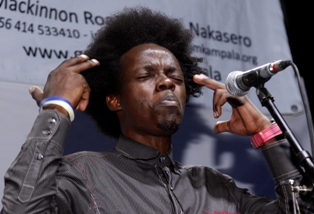 The audience, in turn, participates in the story-telling process through its reactions to the narrative. This tradition of performing narratives remains strong in many countries in sub-Saharan Africa and has been recently revitalised in the form of spoken word.
“The spoken word scene is highly active and artistically extremely exciting, yet remains sparsely documented and hardly connected beyond national boundaries,”Goethe-Institut organisers observe.