By Fred Mbogo
Published January 7, 2014
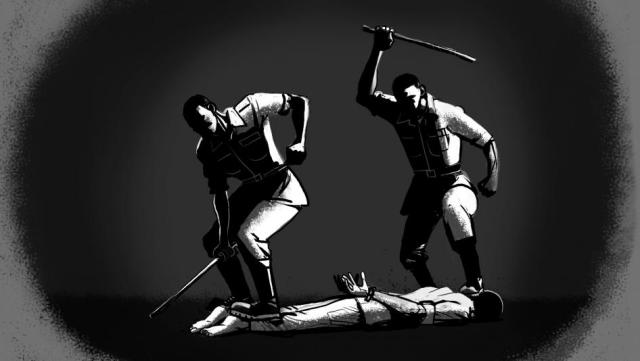
 The Government of Daniel Toroitich arap Moi, the second President of Kenya, could be described as having been rabidly anti-intellectual. It was during the Moi regime that many thinkers–university lecturers, lawyers, journalists, secondary school teachers–were arrested, tortured, imprisoned, detained and denied employment that saw the likes of Ngugi wa Thiong’o go into exile.
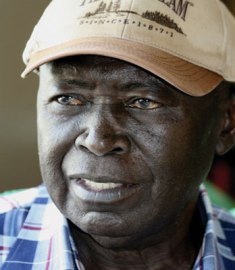
As what came to be known as The Great Purge scattered intellectuals to the four winds of the earth and others chose to see no evil, hear no evil and speak no evil just to survive, William Robert Ochieng, a professor of history, joined the Moi regime as a Permanent Secretary in the Office of the President from which he also penned what could be described as stinging criticism of perceived anti-establishment scholars like Ali Mazrui and Ngugi wa Thiong’o. In fact, one of his last assignments before he breathed his last on December 28, 2013, was an article published in Daily Nation of Nairobi on November 22, 2013 in which he called wa Thiong’o a tribalist; lo Liyong a liar, a non-intellectual and a troublemaker; and Mazrui as irrelevant to Kenya.
Professor William Ochieng, derisively referred to as a ‘provocateur-in-chief’, helped prop up those with humble academic credentials in the arena of thought. Compared to many of the scholars of the 1970s and 1980s who were committed to the Marxist ideals and considered themselves as liberators of the masses, Ochieng could be painted as a sell out.
There was a clear Us (thinkers/scholars/intellectuals) versus Them (politicians) dichotomy in those days. The former thought of Ochieng as a betrayer of the cause for joining the latter; he was a Kenya African National Union (KANU) sympathiser. He was close to President Moi. He served in Moi’s office. He churned out pamphlets and books with ‘Philosophies’ championed by President Moi; the famed Nyayo Philosophy of peace, love and unity, for example. He gave Moi’s government a shine so that it could appear ‘˜learned’ and respectable In the end he was referred to by academic colleagues as a Nyayo Professor. He had sold his academic soul to the powers that be.
He had been plucked from Maseno University, then a constituent college of Moi University that he headed as Principal. It was William Ochieng who had set up the machinery which was later transformed by Fredrick Onyango into the quietly, if not focused and successful, ‘University of Western Kenya’.
Though Ochieng proved that he could be an administrator of great worth, there were murmurs from student leaders of his ruthless, and sometimes underhand, methods of dealing with dissent from students. In the end however, what matters is that many people have graduated from a university he nurtured from its roots. He had made something.
Despite the many distractions, William Ochieng remained relevant to the world of knowledge production. He had laid a good ground for himself in his early days in academia, before his plunge into a hireling for Moi. He co-edited and published books and journal papers of note. His line of thought on the Mau Mau fighters among the Agikuyu, Meru and Embu communities as a band of illiterate, peasant, bloodthirsty thugs and not ‘liberators’ or ‘freedom fighters’ they have always been thought to be by other historians irked many an academic.
There is a ring to Ochieng’s claim that is in sync with his pro-Moi duties. Could he, in fact, have been seduced by the idea of pleasing the powers that be? It goes without saying that the post-independence Governments of Jomo Kenyatta and Daniel arap Moi have attempted to conveniently forget freedom heroes such as Mau Mau.
William Ochieng’s loyalty and servility to the establishment appeared to have paid off, at least from his individual or selfish perspective. Moi may have needed the academic type to make some justifications for some of his actions. But in this collaboration, Ochieng may have betrayed his scholarly calling.
Why could Prof William Ochieng not find it necessary, for example, using his new found friendship with President Moi, to inject some truth into the History curriculum of Kenya that gives priorities to ‘histories’ that may have been deemed irrelevant and omitted essential ones? For instance, the stories of liberation and freedom fighting are glossed over, the failures of Kenyatta’s government are not given space, the intricacies of ideological persuasions followed by Oginga Odinga in contrast to those of Kenyatta are not discussed.
While the incarceration and assassinations of high profile dissenters in the Kenyatta Administration’s governments are yet to be brought on the table, the events surrounding attempted coup-d’etats in both the Kenyatta and Moi regimes are yet to be discussed. How could Ochieng, a leading Kenyan historian working from the Office of the President, have failed to push for an agenda that caters for studies that attempt to truly liberate learners?
If such a leading light as William Ochieng could be trapped into serving an erring President whose regime has been castigated for all manner of ills against the citizenry, what would those academics who haven’t risen to his prominent position do? Is it worth being an academic in an arena in which the urge to make personal gains supersedes the urge to sacrifice for the common good? If all academics were to emulate William Ochieng, would there be space in Kenya for the growth of robust scholarship?
William Ochieng may have irked many, but he also provoked many others to pursue research and engage in debate. For this, Prof William Ochieng’s contribution to Kenyan scholarship cannot be faulted.
Fred Mbogo, PhD, teaches in the Department of Literature, Theatre and Film Studies, School of Arts and Social Sciences, Moi University, Eldoret, Kenya.