By Human Rights Watch Press
Published February 15, 2014
 Uganda’s nascent mining industry could do more harm than good for indigenous people unless the government makes land tenure reforms and mining companies start respecting those rights.
A report released on February 3, 2014 by Human Rights Watch calls upon Uganda to implement reforms to respect the rights of indigenous people to determine how their lands are used.
The 140-page report, How Can We Survive Here?: The Impact of Mining on Human Rights in Karamoja, Uganda, examines the conduct of three companies in different stages of the mining process: East African Mining, Jan Mangal, and DAO Uganda. Human Rights Watch found that companies have explored for minerals and actively mined on lands owned and occupied by Karamoja’s indigenous people. But the Ugandan government, in partnership with the private sector, has excluded customary land owners from making decisions about the development of their own lands and has proceeded without their consent. Human Rights Watch also found that donors, including the World Bank, have failed the people of Karamoja by working to enhance the burgeoning mining sector without addressing indigenous people’s rights, including the right to development.
“Mining development could be a real boon to the people of Karamoja, bringing jobs and better security, services, and basic infrastructure,” said Daniel Bekele, Africa director at Human Rights Watch. “However it is still unclear how the people of Karamoja will benefit, if at all, from mining, or how the government intends to protect their rights during this process.”
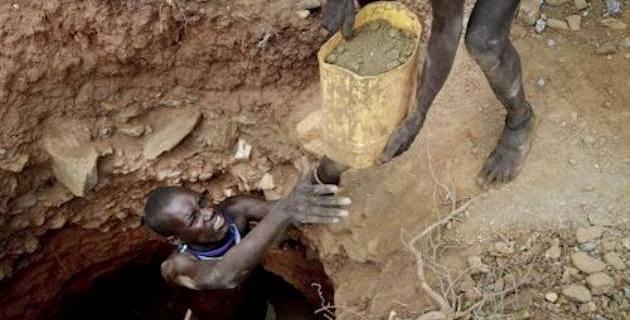
Karamoja has long been thought to contain considerable mineral deposits and appears on the verge of a mining boom. Several extractive companies have gone to Karamoja in the past two years seeking natural resources, particularly gold and marble. The Ugandan government has massively accelerated licensing of companies to carry out exploration and mining operations – a more than 700% increase between 2003 and 2011. But the government’s ability to support and educate affected communities and inspect and monitor the companies’ work lags far behind.
While foreign investment in Uganda has escalated in recent years, development of the oil sector in the western part of the country has renewed concerns about political patronage, the ability of civil society to critique government development plans, and corruption. The mining in Karamoja raises similar concerns.
 The report is based on research in Uganda from May to November 2013, including 137 interviews, 61 of them with people living in areas where companies are exploring for minerals or actively mining. Human Rights Watch also interviewed representatives of the companies, the central and local governments, the army, national and international nongovernmental organisations, and donor governments and agencies.
The government urgently needs to create a land registration system that ensures security of tenure, particularly for communal land owners, and respects land rights of indigenous people, Human Rights Watch said. In the absence of such adequate protection, fears of land grabbing have proliferated. Uganda’s land laws recognize customary land ownership, but the government has not granted such certificates anywhere in the country.
Land is held communally in Karamoja and used for grazing livestock and growing crops, as well as for traditional purposes such as burials and spiritual shrines. Some groups migrate across the lands seasonally. There has been considerable governmental resistance to communal or collective land ownership involving large numbers of owners, as in Karamoja.
 Governments have a duty, and companies have a responsibility, to consult and cooperate with indigenous people to obtain their free and informed consent prior to the approval of any project affecting their lands or territories and other resources. This responsibility is based on indigenous people’s right to own, use, develop, and control their traditionally occupied lands and resources, which has been affirmed by the African Commission on Human and People’s Rights and the United Nations Declaration on the Rights of Indigenous People.
Uganda’s mining law requires negotiating a surface rights agreement with landowners before mining begins, and payments of royalties once revenues flow, but the law does not require any communication or consent during exploration work. And communities that cannot prove land ownership may not ultimately receive royalties or be able to protect their land.
The presence of the Ugandan People’s Defence Forces at exploration and mining operations has prompted significant confusion and fear, and is likely to impede constructive consultations with affected communities, Human Rights Watch said.
 International donors, particularly the World Bank, have had a prominent role in supporting Uganda’s development of the mining sector, but so far, projects have excluded indigenous rights and therefore failed to set a positive precedent that would have supported the rights of the people of Karamoja.
“Donor-supported mining projects have yet to successfully address indigenous people’s rights in Uganda,” Bekele said. “The key requirement that all development projects, including minerals exploration, may only take place with the free, prior, and informed consent of the indigenous land owners needs to be at the core of all donor projects in Karamoja.”