By Kevin Kriedemann
Published April 15, 2014
 A groundbreaking documentary series highlighting the efforts of health workers in Africa and Asia in keeping their communities free of illness premieres in Kenya at 11.00PM on April 17, 2014.
RELATED: How Pop Culture Drives African Women into Skin-Bleaching
This week’s episode. the second documentary in a groundbreaking Al Jazeera series, Lifelines: The End Is In Sight, profiles the extraordinary work of African health heroes as they tackle river blindness in Uganda and trachoma in Ethiopia.
River blindness is a fly-borne parasitic infection which can cause intense itching, eyesight damage, and often blindness.
 Lifelines: The End Is In Sight focuses on three health heroes overcoming river blindness in Uganda, where NGOs are focusing on eliminating the illness. Since 2007, river blindness has been interrupted in six out of 18 focus areas where the disease was endemic.
Moses Katabarwa’s studies led him to a revolutionary way of distributing medication that would improve the lives of many of his countrymen. His idea was simple: let people in small communities take control of distributing their own sight-saving medicine. This inspired approach has meant that in Uganda, river blindness is being eliminated one area at a time. His method is now being extended to other countries plagued by the disease.
RELATED: The ‘High-Heel’ Killer Bug Stings Women in Kenya
“My first experience with river blindness was in western Uganda, where I found a community totally devastated by this disease. These guys couldn’t do much for themselves and so that gave me a cause to fight for,” Moses Katabarwa says. “When it comes to the work I’m doing, I feel that I’ve touched many lives, touched people who have never been reached, and so that gives me the inner satisfaction. Emotionally I am at home; I am at peace.”
David Oguttu is a parasitologist with the Ministry of Health in Uganda. He is a senior lab technician at a laboratory in Kampala, one of the first of its kind for river blindness research in Africa. Since the laboratory was set up in 2007, morbidity levels have decreased and all affected communities are being reached.

David Oguttu is committed to eliminating the disease. “You can do nothing greater in the community than eliminating the diseases which are haunting them,” he says.
RELATED: Make Global Reproductive Health ‘Sexy
In Amhara province in the Ethiopian highlands, the region with the highest prevalence of trachoma in the world, lives 85-year-old Wolde who is dependent on his daughter, Amalda. His wife is blind and Wolde has advanced trachoma. The problem is that Amalda also suffers from trachoma. The only way to avoid going blind is for them to have corrective surgery at a free clinic 20 kilometres away, where Dasash Hasen, a 21-year-old nurse with just three weeks training, will operate on Wolde’s eyes.
Trachoma is the second leading cause of blindness in the world: six million people worldwide are blind from trachoma, 21 million are affected, and a further 320 million are at risk.
In the advanced stage of the disease, called trichiasis, a person’s eyelashes turn inward, causing pain, scarring, diminished vision, and, eventually, blindness.
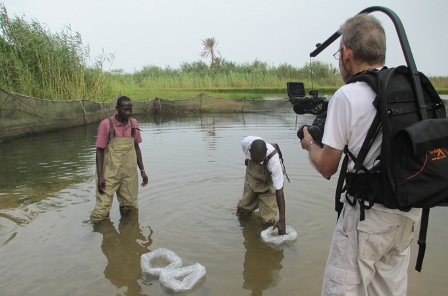
Lifelines: The Quest for Global Health highlights the work of inspiring Africans on the frontline of public health. The groundbreaking eight-part series is filmed up close as these health heroes forge dramatic breakthroughs while tackling nine of the worst diseases and conditions that afflict poor people: Guinea worm, leprosy, malaria, maternal and neonatal mortality, polio, rabies, river blindness, schistosomiasis (also known as bilharzia or snail fever), and trachoma.
Lifelines: The Quest for Global Health has a number of episodes set in Africa, where it shares both the hope and heartbreak from the grassroots fights against malaria in Tanzania, against schistomomiasis in Senegal, against maternal and neonatal mortality in Malawi, and against Guinea worm in Sudan and South Sudan.
RELATED: Kenya’s Anti-Female Circumcision Law Clashes with Widespread Culture