By Steve Biko Abuya with Ogova Ondego
Published July 17, 2014
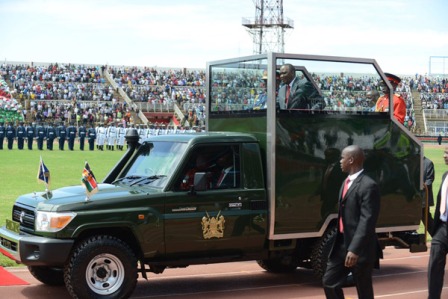
 Never before had Police stations been attacked, armouries looted, security vehicles burnt and officers killed. Never before had criminals been so brave as to attack towns and occupy them unchallenged for half a day and then casually walked away. Never before had a shopping mall in the commercial and political capital of the country that had for half a century been considered a haven of peace in a sea of turbulence, been attacked and held for three days by terrorists. And, yes, never before had tourists been evacuated from the country. The President had never attended a national function held in a secure stadium in Nairobi riding in a bullet-proof vehicle that resembles a metal cage.
RELATED: BBC Africa Debate Focuses on South Sudan at One
But, 51 years after gaining political independence from Britain in 1963, all these unfortunate incidents have come to pass in Kenya that is facing one of the most serious levels of insecurity.
 It goes without saying that one of the most basic services of any government worth its salt is to provide security to every child, woman and man in a country it administers as all ‘development’ activities revolve around a safe and secure environment.
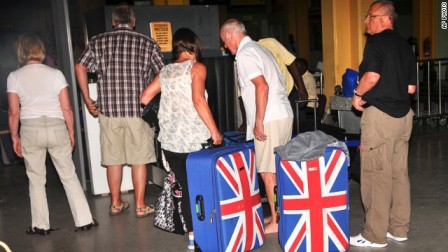
When 400 British tourists were evacuated from Kenya by tour operators Thomson and First Choice who also cancelled all flights to Mombasa for six months on May 15 &16, 2014 following advice from the Foreign and Commonwealth Office (FCO) against all but essential travel to Mombasa, the government of Kenya accused the British of neo-colonialism and patronising tendencies towards Kenya.
RELATED: Kenya Sells Justice to the highest bidder
A fortnight later, however, President Uhuru Kenyatta did a worse thing to the country’s image than the most tersely worded US or UK travel advisory to Kenya: he entered Nyayo National Stadium in an armoured Toyota Land Cruiser. The message was loud and clear: Kenya is a no-go zone unless, of course, one can afford expensive military hardware and heavily armed sharp shooters.
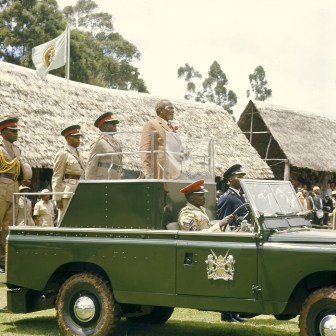
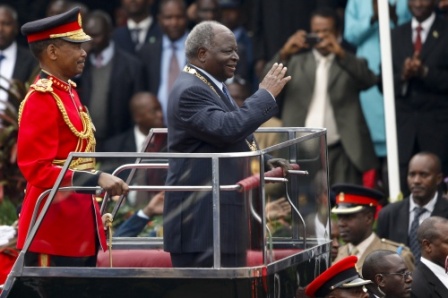 And, as if the President were presiding over activities in a city as lawless as Mogadishu, Kabul or Tripoli, security agents remained atop one of the armoured vehicles stationed near the presidential dais throughout the Madaraka Day celebrations ceremony. The message was clear: Kenya is no longer safe for the President to travel in an open ceremonial Land Rover as had his predecessors: Presidents Jomo Kenyatta, Daniel arap Moi and Mwai Kibaki.
What’s contributing to this mounting insecurity levels in the country and what can be done to bring the situation under control?
RELATED: Kenya’s Deadly 2007-2008 Election Violence Trial Starts in The Hague
Security experts maintain that unless a country’s national intelligence service is pro-active, it is difficult to deal with insecurity, especially the kind that springs from international terrorism.
 In the aftermath of the terror attack on Nairobi’s Westgate shopping mall on September 21, 2013 in which more than 67 people perished and several others were injured, Kenya’s Parliamentary Defense and Foreign Relations Committee accused the country’s security agencies of not heeding warnings from the security intelligence about the impending attack.
A similar thing happened in June 2014 when Mpeketoni in Lamu on the Kenyan south coast was attacked and occupied for at least six hours as the attackers killed, looted and plundered the town; unchallenged. The Kenya Police Service is said to have failed to act on warnings from the National Intelligence Service (NIS); more than 60 people were killed. Although the Somali terror group, Al-Shabaab, claimed responsibility for the attack, the government of Kenya placed blame elsewhere.
RELATED: Hold Congo-Kinshasa Army Commanders Responsible for Rape
Kenya’s involvement in the Somali conflict from 2011 when it sent soldiers in Somalia ‘in the interest of Kenya’ appears to have attracted retaliatory attack by Al-Shabaab within Kenya. While it may be necessary to help in restoring law and order in Somalia, that shouldn’t be at the expense of Kenya’s own security. Kenya needs its troops more than Somalia does. In case Kenya has more soldiers than it needs at home hence the need to keep them in Somalia, it would be more prudent to bring them back home so they may be deployed to man the long and porous border between Kenya and Somalia to prevent insurgents from crossing in and out of Kenya.
 Security cannot be guaranteed within the borders of Kenya unless the citizens have respect for and trust the country’s law enforcement agents and vice versa. This, coupled with community policing, could help in rooting criminal elements out of society before they harm the country.
Lack of a clear central command in the security system is said to be working against efforts aimed at fighting insecurity in Kenya.
No government can provide security without the help of the citizens of the country it administers. If Kenyans don’t trust their government, it is upon the government to win them over through cultivation of trust, respect and patriotism. Where this does not exist, citizens serving in crucial departments like security, immigration and customs use their positions for short term gains at the expense of the country. They sell citizenship and let criminal elements into their country in return for monetary gain.
RELATED: BBC Africa Debate Asks Whether Women are Winning the Power Battle in Africa
Unless everyone in Kenya–the governed and the governor–is educated on the importance of embracing the National Loyalty Pledge:
I pledge my loyalty to the President
and Nation of Kenya
My readiness and duty
to defend the flag of our Republic
My life, strength and service
in the task of nation building
In the living spirit embodied
in our National motto ‘Harambee’
and perpetuated in the
Nyayo philosophy
of Peace, Love and Unity,
Kenya has a Herculean task in dealing with the imbroglio that is insecurity.
 Yes, insecurity is strangling Kenya’s economy to death. The tourism sector is on its knees. Scared citizens are fleeing their homes and abandoning their socio-economic activities. Businesses are disrupted. Mistrust among communities is on the upswing.
But instead of the Kenyan government taking the insecurity threat seriously and moving hastily to address it, it is playing games in purporting to issue travel advisories to Kenyans travelling to and through England. For instance, it warned Kenyans on July 12, 2014 against travelling through London’s Heathrow Airport.
“According to information provided by US officials,: it said in a statement issued by a Karanja Kibicho of the Foreign Ministry, “Al-Qaeda operatives in Yemen and Syria are developing sophisticated bombs that could bring down a plane. The information states that Britain would be the most likely country to be affected. Kenyans are advised NOT to travel through London Heathrow where there is substantial threat of a possible attack.”
RELATED: Socio-Political Uncertainty Hangs Over Tanzania as it Marks 50th Republic Day