By Ogova Ondego
Published September 23, 2014
 The moment Arusha African Film Festival asked me to speak on Youth Engagement and Socio-Cultural Integration in East Africa during the opening of this five-day Acting for Film workshop, what sprang to my mind was that one can only be engaged with what one understands, has embraced and is practising.
So, why should youth be engaged and why do we need socio-cultural integration? How does cultural, let alone regional, integration involve our youth?
As I thought about possible answers to the above questions, I recalled the advice of the Apostle Paul in 2 Timothy 2:2: The things which you have heard from me in the presence of many witnesses, entrust these to faithful men who will be able to teach others also.

This also reminded me of the hands-on training—call it apprenticeship, mentorship or discipleship—employed by great historical figures like Jesus Christ, Plato and Aristotle to educate their wards.
Yes, children and youth are agents of change; depending on how we socialise them in the ways in which we want them to go.
 Culture is defined as the ways of a people; their worldview; their intellectual and creative expressions; the way they live and adapt to their environment.
For quite a while now I have heard people in Kiswahili-speaking Kenya and Tanzania define artist or msanii as a con artist. Is that your definition of creative or cultural? Are you, you who is attending the Acting for Film workshop, msanii, an artist?
RELATED: Nairobi to Recognise Youth Creativity in Painting and Videography with Cash Prizes
Our cultures and identities both define us besides providing us with the direction to follow on any development initiative. Our cultures now form what is known being referred to as cultural or creative industries or economies. It is from these industries that the generation of today and tomorrow shall reap bountifully as filmmakers, musicians, actors, writers, thinkers, teachers, managers, investors and entrepreneurs. That is one reason why the youth should be engaged: to get a livelihood, an identity and a sense of being. That is one reason why there should be socio-cultural integration in East Africa to enable us see things from an almost standard or regional perspective: a Burundian can work in Kenya, a Tanzanian in Uganda, etc. We are talking about film schools, customs unions, free movement of people, goods and services across East Africa made possible by standard regulations.
We at Lola Kenya Screen audiovisual media festival, skills-development programme and marketing platform for children and youth in eastern Africa refer to children and youth as the generation of today and tomorrow. We focus on children and youth as the hope for humanity. It is only through children and youth that humanity will continue to exist. And here we employ the hands-on, learn-as-you-do approach used by makers of history like Jesus Christ, Confucius and Aristotle.
Why?
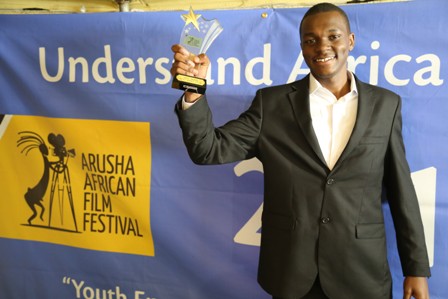
 We are gathered here at Arusha African Film Festival under the theme, Youth Engagement and Cultural Engagement in Africa. Our platform, a regional body known as East African Film Network (EAFN), was formed in order to champion the socio-cultural and economic development of East Africa through motion pictures, cultural identity and regional integration.
RELATED: Kenya Wrestles with Non-Existent Reading-For-Leisure Culture
The future of East African Community, East African Film Network, Arusha African Film Festival and indeed Africa, shall be defined by our capacity to articulate our vision through well thought out and formulated actions and partnerships based on African humanism or utu philosophy of I am because we are. This is collective, not individualistic; outward-, not inward-looking; selfless, not selfish. Sold to children and youth, we could rest assured that the future is secure.
EAFN should be our stronghold, our laboratory, our bouncing board of ideas. Our strong, varied and diverse cultures and identities should make us even stronger individually and collectively even as a new industry springs from them; for the benefit of our youth, nation-states and regional bloc.
As we reach out for partnerships with the rest of the world and humanity, it is the youth who should determine our destiny and define our borders and shape our world for they, not us, the generation of yesterday and today, are the ones to whom tomorrow belongs. Indeed, our dreams shall be realised (or lost!) through them: it is the youth who are looking for education, positioning themselves for careers, grappling for identities and starting to have families. That is why they must have a say in the way policy is formulated and implemented.
We, the adults, can wax lyrical, indeed philosophical, on contentious issues like Migingo Island in Lake Nyanza (aka Lake Victoria): That the island belongs to Kenya but that the fish in its water belong to Uganda. We can even sable-rattle on the matter. But what do the youth want?
 We can talk about the coming together of our five countries, but what do you, our youth, want?
We can espouse cultural diversity, but what do you, the youth, embrace?
RELATED: 3rd Africa International Film Festival Promises an Exciting Programme
We can invoke regional identity, but is that what you, the youth, want?
Do our youth want a political union, a monetary union, a common market? Are these noble goals? Can they be sold to the youth?
Indeed these ideals will succeed and fail only if the youth of the five partner states are actively engaged in the grand dreams of their elders.
And that is partly why you, our youth, are here for this workshop.
RELATED: 16th ZIFF Festival of the Dhow Countries Rears to Go
 We want to mentor you, train you, socialise you—reliable, competent and faithful people to whom we can entrust the responsibility of mentoring others ”in the East African Community worldview. We are training trainers, ambassadors and envoys of our region.
You are here to Accept, Formalise, and Make Respectable that which has, till now, been considered informal; that which has been merely tolerated and that which has been treated disdainfully. It is up to you to redeem msanii and ‘artist’ from insults and repackage, formalise and make them Respectable terms. Because it isn’t a crime to be a msanii.
This was the speech delivered by Ogova Ondego, Managing Trustee, Lola Kenya Screen, Nairobi, Kenya, during the opening of Acting for Film Workshop for youth from the East African Community at 3rd Arusha African Film Festival, 22.09.14. It was titled, Accept, Formalise, Make Respectable.