By Abdi Ali
Published November 11, 2016
 The organisers of the Commonwealth Short Story Prize say they have received “our highest ever number of entries from 50 countries, including Fiji and Tonga.”
RELATED:International Theatre Festival Comes to Kampala
Naming the judges of the competition for 2017 as Kamila Shamsie (Chair), Zukiswa Wanner (Africa), Mahesh Rao (Asia), Jacob Ross (Caribbean), Jacqueline Baker (Canada & Europe) and Vilsoni Hereniko (Pacific), Commonwealth Writers say they “also received original language entries in Bengali, Kiswahili, Portuguese, and our first ever in Samoan.”
They say the longlisting process has begun and that the judges will decide the shortlist by March 2017.
Also announcing and awarding their winners are BBC in collaboration with British Council
The winners of the three main prizes of the 25th BBC Playwriting Competition are Joanne Gutknecht from Canada, Pericles Silveira from Brazil and Jude Erupu from Uganda.
RELATED:Commonwealth Crowns Short Story Writer, BBC Shortlists Playwrights
Gutknecht and Silveira, the two first prizes for writers with English as a First Language and English as a Second Language, respectively, have attended the prize-giving ceremony in London where they have also witnessed their radio scripts–Playing With Fire and The Day Dad Stole a Bus–being developed and recorded at the BBC, ahead of their broadcast in 2017.

Ugandan Erupu, who won the third prize–the Georgi Markov prize–that is touted as is celebrating the most promising script from the competition’s shortlist for his play, Darkness at Dawn, did not make it to the ceremony.
 Meanwhile Kampala International Theatre Festival (KITF),which is slated for November 23-27, 2016, announces more plays to be staged at Ndere Cultural Centre in the Ugandan capital.
The Audience Must Say Amen, a poetry production written and performed by Peter Kagayi of Uganda, is based on his book, The Headline That Morning and other Poems (Sooo Many Stories, 2016), Kagayi personifies himself into stage characters of his poems to bring out the deficient cause of Uganda’s identity crisis caught up in the promise of political dystopia. Uganda is now trapped in democracy she cannot get out of and the poet engages the audience in a word-play of truth-or-fact poetry to highlight the indolence of society blind to what is happening to it.
RELATED:Leading Ugandan Poet Gets Published
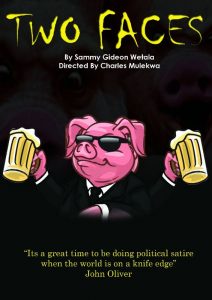
Other thought-provoking productions from Uganda in the festival include The Surrogate by Achiro Patricia Olwoch that revolves around a young woman who gets pregnant out of wedlock with a homosexual man in a culture that loathes out-of-wedlock pregnancies and homosexuality; Black by Aganza Kisaka that tackles the frustration of a young African girl who wants to return to her home country because she can’t stand the stereotypes, mistreatment and racism abroad; Two Faces by Sammy Gideon Wetala about coming face to face with the hard realities of life lived against days of uncertainty; and Tropical Fish by Doreen Baingana that traces a young ‘campus girl’s discovery of the power of her sexuality in an affair with an older white businessman in Kampala.
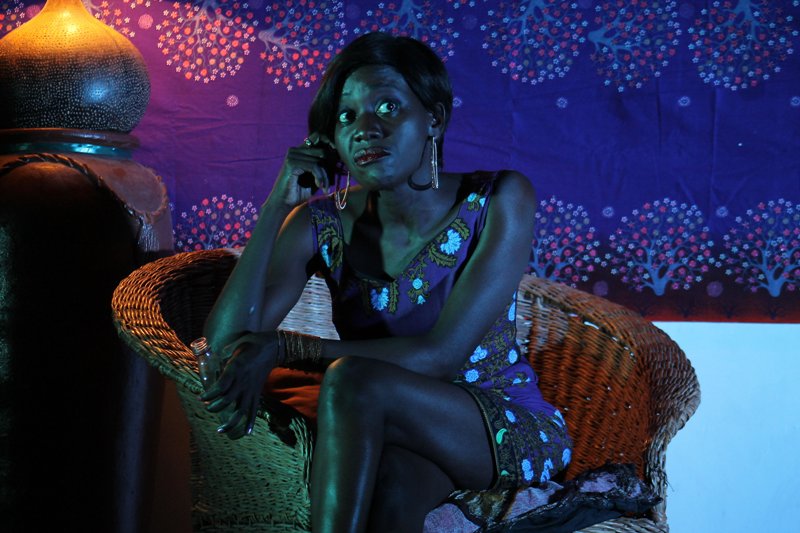
Lebanon, too, shall be represented in Kampala with Barzakh by Jad Hakawati and Roaa Bzeih.
Barzakh or Isthmus in Arabic, is not just a barrier between two things but is also the place that stands in between earth and the afterlife from the moment of death and until judgment.