By Sheila Waswa
Published December 25, 2016
 More than 50 years after Africa gained political independence from European colonisers in the 1960s, the continent’s highly trained career women and senior leaders cling to the ‘superior’ hair of the colonisers: wigs, weaves and relaxed hair.
Such women are often jolted to reality check when they are provoked by comments like the ones Chris Kirubi, a Kenyan businessman, made on national television to the effect that he hates African women who wear dead people’s hair.
Hair, whether natural or artificial, is just hair, many women retorted, dismissing Kirubi.
That natural African hair reflects the identity of the Black race that has since antiquity been discriminated against is not up for debate. It can be concluded that black women who wear weaves, wigs and palm their hair do not appreciate their identity and suffer from what could be referred to as ‘inferiority complex’.
Why is it that the significance of a black woman’s hair seems to be understood and appreciated more by Africans in the Diaspora than by those at home?
Why do supposedly well socialized, well educated and therefore better informed professional African women who should be looked upon for guidance and direction promoting the notion that Caucasian hair is superior to African hair?
RELATED:Yellow Fever Grips Africa
Kenyan journalists, teachers, civil society workers, television news anchors, radio presenters,lawyers, politicians, civil servants, models, musicians and a host of other professionals appear to worship the white woman’s hair and physique: by wearing wigs and weaves and relaxing their hair, lightening their skins and aping Euro-American accents when they are supposed to be the role models for children and youth in things Africans.
 A BBC News article on hair says that hairstyles indicated a person’s family background, tribe and social status. Some Africans who found themselves in the West courtesy of slavery, tried to fit in after slavery was abolished in the 19th century by conforming to the ways of their former white mistresses and masters in order to fit in.
“Men and women would put their hair in a hot chemical mixture that would almost burn their scalp, so they could comb it back and make it look more European and silky,”BBC quotes Aaryn Lynch, the producer of a hair exhibition, as having said.
Looking like the colonisers at the time seemed to be the only way to attain some high social status: after all, the white race seemed all too superior.
RELATED:Black Fashion Models Suffer Under the Hypocrisy of the Fashion Industry
In the 1930s, political activist Marcus Garvey developed the Rastafari (based on Emperor Haile Sellasie of Ethiopia as the messiah for the black race) theology in Jamaica so that he could improve the status of his African Caribbeans. The theology, according to Rumeana Jahangir, the writer of the BBC article, required believers to twist their uncut hair into dreadlocks.
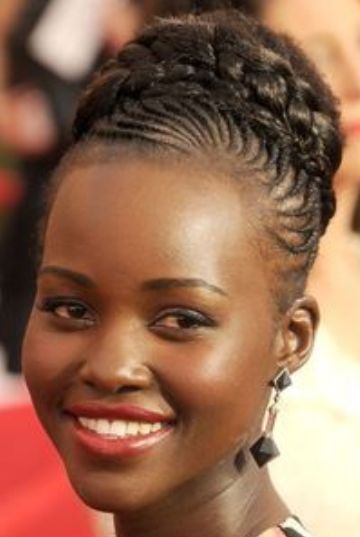
 Some of the hair styles that are considered as belonging to the black race include Dreadlocks, Afro, Corn Rows, Bantu Knots and Twists.
So why don’t professional African women prefer artificial Caucasian styles over those of their own race?
“Caucasian hair is fashionable and stylish. Given that it comes in various lengths, colours and styles, it offers assorted looks for the wearer,†says Alice Ariri, a university student in Kenya.
“Natural hair is considered unkempt and unprofessional by employers in Kenya,” says Dorcas Atoo, a civil servant.
“Weaves and wigs as well as relaxed hair are convenient and easier to maintain,” says Sheila Nekesa. “Relaxed hair is generally easier to comb than natural African hair which knots and coils.”
RELATED:The First Christmas
“I tried to maintain my natural hair for six months within which it irregularly fell off. I have no option but to hide my damaged hair in weaves for purposes of my job,” says Naomi Wema, a customer service officer with a mobile service provider in Nairobi.
 Jackline Wangila, a police officer, says women with damaged hair or naturally receding hair lines find relief in weaves and wigs.
While weaves and wigs may offer styling options that complement natural hair in order to reduce monotony, one may wonder why black women don’t go for African-looking weaves and wigs.
“I keep my hair natural 90% of the time and if I have to weave I choose the Afro one, one that is closest to African hair as possible,” says Boera Biaki, an actress.
According to Chimamanda Ngozi Adichie, a Nigerian author, relaxing one’s natural African hair is like being in prison, being caged in while the hair rules one.
“You’re always battling to make your hair do what it wasn’t meant to do,” she writes.
Keeping artificial hairstyles are also time-consuming and require a lot of effort, for instance, one may take lots of time to braid her hair or to try out numerous chemical relaxers before settling on the right one.
RELATED:Eyes Feast on Partially Opened Books and Boobs
Wearing a natural African hairstyle is generally cheaper, says Vivian Kisaka, a university student in Kenya.
 “Keeping short natural hair works perfectly for me. It is cheaper because I trim it at least once in a fortnight, spending Sh100 (about US$1) and all I have to do is apply hair oil like baby care and then comb it.”
Most weaves on the other hand range from at least Sh450 (US$4.5) a pack to human hair samples that could cost Sh10000 (US$100).
Why spend so much on artificial hair created and pushed by people who impose the super race on the inferior one?
But not all is lost as natural hair enthusiasts in Kenya are coming up with initiatives to promote maintenance of natural hair.
A natural hair enthusiast and blogger, Margie Muga, says every woman should embrace her natural hair. Her blog, justmargie.com, takes people on the journey of maintaining natural hair, showing them how natural hair can be cared for at home without visiting a salon. That, she says, would save a woman at least Sh2000 (US$20) per month because all a natural hair needs is some hair oil, a comb and some basic skills on how to care for it.
RELATED:London Show Focuses on Fashion in Black Africa
Another blog, kurlykichana.com, gives women tips on how to transit from relaxed to natural hair and how to maintain natural hair, offering various styles that are available for exploration.
 However, women who try to embrace natural hair are looked down upon by others who take them to be so poor they cannot afford “dead people’s hair”.
Jane Akinyi, a Kenyan who studies in South Africa, narrates how the journey towards embracing natural hair was received when she returned home to visit her family.
She says “Is plaiting in South Africa that expensive?” was the first question she was made to answer.
Like many others, Akinyi’s family take people who keep natural hair to lack the money for purchasing weaves and wigs.
An African American actress, model, comedian and television host called Tracee Ellis Ross is quoted as having said, “I love my hair because it’s a reflection of my soul. It’s dense, it’s kinky, it’s soft, it’s textured, it’s difficult, it’s easy and it’s fun. That’s why I love my hair.”