By Ogova Ondego
Published January 5, 2018
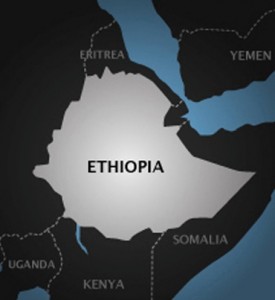
 Despite perennial incidents of drought, famine and socio-political instability, Ethiopia is a leading economic performer whose estimated annual gross domestic product (GDP) growth rate of 7.3% in 2017 is expected to rise to 7.5% in 2019.
The 2018 edition of the World Economic Situation and Prospects report (WESP2018) of the United Nations presents East Africa as being the ‘fastest growing sub region on the continent, with GDP growth of 5.3% in 2017’.
WESP2018, that was launched in the Ethiopian capital, Addis Ababa, on January 16, 2018 shows that Africa as a whole is expected to see a recovery in GDP growth from its current 3.0% to 3.5% in 2018, and 3.7% in 2019. It however notes that Africa’s GDP growth on a per capita basis is ‘negligible’ in central, southern and western parts in 2018-2019 as ‘these regions combined are home to nearly one third of the global population living in extreme poverty’.
RELATED:African Economic Outlook 2018 Report Launched
Bad news, right?
Though many  economic analysts take Ethiopia’s so-called economic growth as artificial and non-sustainable as it is driven by donor funding, UN’s WESP2018 says economic growth in the horn of Africa country is driven by a ‘strong domestic consumption, increase in investments and government expenditure on infrastructure such as roads, energy, and the construction of industrial parks for expansion of the industrial sector’.
Khaled Hussein, Chief of the Forecasting Section of the Addis Ababa-based United Nations Economic Commission for Africa (UNECA), described the 2018 edition of WESP–a UN flagship publication on expected trends in global economy–as bearing “some good news and some worrying news.”
The good news, Hussein said,is that “After a long period of stagnation, global economic growth reached 3 per cent in 2017 – the highest growth rate since 2011 – and the growth is expected to remain steady in the coming years.”
RELATED:Investment in African Real Estate to Reach Fever Pitch
Citing WESP, Hussein said that global financial markets were “remarkably buoyant in 2017” and that investment conditions improved, providing opportunity for countries to focus policy towards long-term issues such as reducing inequalities, economic diversification and eliminating deep-rooted barriers to development.
 That “very few least developed countries (LDCs) are expected to reach the SDGs target for growth of at least 7 per cent because LDCs continue to be hindered by institutional deficiencies, inadequate basic infrastructure, high levels of exposure to natural disasters as well as political instability and challenges to security” is what constitutes the ‘worrying news’, Hussein said.
WESP, that calls for renewed efforts to decrease the over-reliance on commodity revenues through economic diversification and structural transformation is produced annually by the UN Department of Social Affairs, the UN Conference on Trade and Development (UNCTAD), the five UN regional commissions and the UN World Tourism Organization (UNWTO).