By OgovaOndego
Published February 23, 2021
 It is noon in Nairobi. Surging crowds are pushing and showing to get into Odeon Cinema building not to watch the latest Hollywood blockbuster but for lunch time worship and prayer service.
As soon as the doors are flung open, the crowds rush in and within no time all the seats are taken. Many more people are left outside while others stand in any vacant space. they can find. For the next hour loud music pulsates in the hall, mingling with screams, shouts, ululation, whistles and loud prayer before the congregation breaks into fervent signing: “Nitamuimbia Bwana kwa kuwa yeye ameniona”.
The worshipers clap energetically and dance vigorously without any inhibition. Welcome to Pastor Pius Muiru’s Maximum Miracle Centre, a church that is currently riding on the crest of popularity. Like this lunch time meeting, Muiru’s crusades in the recent past have attracted crowds that would put many a politician (and other evangelists?) to shame with envy.
RELATED: Poverty-Busting Preachers Invade Kenyan Television in Eye-Pleasing Choreographed Shows
But why are Nairobians getting so caught up in the crusade frenzy?
Dr Samuel Gatere, a consulting psychiatrist in Nairobi, says insecurity, especially after the 1998 bomb attack of the Embassy of the United States of America in the heart of Nairobi has scared many people as they have realised how vulnerable they are. They are seeking security and meaning in spirituality, he explains.
Dr Gatere says: “Those who do not attend crusades are resorting to devil worship, witchcraft and astrology. Some Christians are abandoning their faith for Islam in search of satisfaction.”
RELATED: Collaboration and Specialisation in African Filmmaking Stressed at Monthly Film Forum
 A sociologist who declines to be named said socio-economic problems and the mounting general insecurity in Nairobi has confused many people who came to the city hoping for a better life but have been disappointed. Such people, she explains, are the ones frequenting so-called miracle crusades.
Quoting Emille Darkheim, Dr Gatere says people always try to find God whenever they feel vulnerable.
“We in Nairobi have abandoned our ways for unattainable western lifestyles. The norms, values and other social systems that held us together have disappeared and we have no identity…”
RELATED: What Happened to Kenya’s National Poverty Eradication Strategy?
He says that what Nairobians are manifesting is religiosity rather than revival.
“We see so many people at crusades and special church services but this is not accompanied with any observable changed lifestyles,” says Dr Gatere, lamenting that charlatans are taking advantage of the vulnerability of Kenyans to exploit them for material gain.
“There is certainly a commercial aspect to the way these so-called evangelists are going about their business. Instead of working together as a team, they are competing to outdo one another.”
He says it is worrying to see people waking up one morning and declaring themselves apostles, bishops, reverends or other religious-sounding titles without ever having studied theology.
RELATED: Rapid Industrialisation Key to Africa’s Development
 An evangelist who often tells her followers that one does not have to study theology to be a preacher is Teresia Wairimu Nilson of Faith Evangelistic Ministry who now goes by the title Evangelist Wairimu.
“I am worried about crusades emphasizing miracles, works and wonders at the expense of repentance. Whipping up people’s emotions through entertainment does not help. People flock to such crusades to hear what their ears are itching for and to just feel good about themselves but come out without any evidence of changed lives because the preachers have abandoned the gospel of repentance in preference to that of materialism,” Gatere says.
RELATED: Kenya Rural Roads Authority Snuffs Life Out of Village
He argues that by emphasising miracles and materialism, preachers like Margaret Wanjiru and Teresia Wairimu have departed from the gospel.
Among the things the two usually tell their followers are about the size of their television sets, microwaves, and the property they own as a result of being obedient to God.
Mark Kariuki and Wilfred Lai of Jesus Celebration Centre (JCC) in Mombasaare other evangelists who boast of what they have achieved as the serve God.
RELATED: Symposium Discusses University Education in Kenya
 A pastor at Nairobi Pentecostal Church says there is a wind of religiosity sweeping across Nairobi. Like Dr Gatere, he says this is not revival.
“Crusades are usually meant for non-Christians but 90 percent of those who attend crusades in Nairobi are followers of the evangelists concerned. These preachers are competing to win followers to themselves rather than to Christ,” says the Pastor who declined to be named. “People like Muiru, Wairimu, Wanjiru, Lai and Kariuki are building personality cults of themselves and are not necessarily involved in revival as we understand the term.”
A psychologist who says she believes in miracles argues that it is foolhardy for anyone to pretend that miracles happen to everyone at all times in the same manner.
She gives the example of Wairimu who, she says, had ordered a journalist who was ailing from a kidney problem that she was healed and that she should not use any medication.
“Had she not gone for treatment abroad,” says the doctor, “this woman would have died.”
RELATED: Your New Weekend Getaway Venue Beckons
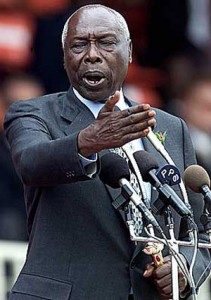 Dr Gatere, who says he was a member of the committee appointed by President Daniel arap Moi in 1994 to investigate allegations of devil worship in institutions of learning and its link to drug abuse and other anti social activities, says, “We must be extremely careful as we live in perilous times. We are hearing of miracle crusades which are coming immediately after our probe.”
He says Satan can deceive even by fabricating testimonies.
“Many of the people claiming to be miracle-working evangelists have been accused of doing various bad things against society. While some rape women, others have left behind them a trail of illegitimate children. There are many children in Nairobi who were conceived at night-long religious services,” he says.
He gives the example of a former fiery evangelist to illustrate the point. “He was later expelled from the church he had founded by his followers for his unbecoming conduct. Like the current crowd-pullers, he was intelligent and eloquent and no one would have known how rotten he was.”
Saying that he himself is a product of the Kutendereza revival in East Africa, Dr Gatere says miracles, faith healing, and speaking in tongues are gifts of the Holy Spirit which should not precede salvation. He says Christians should shun all-night prayer meetings known as kasha in Kiswahili as they expose them to temptation.
NB:
This article was written in 2000. Dr Samuel Gatere (1932 -2012) was a psychiatrist, counselor and public speaker.