By Bobastles Owino Nondi
Published September 22, 2004
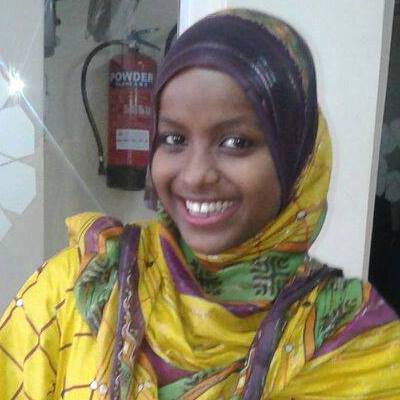
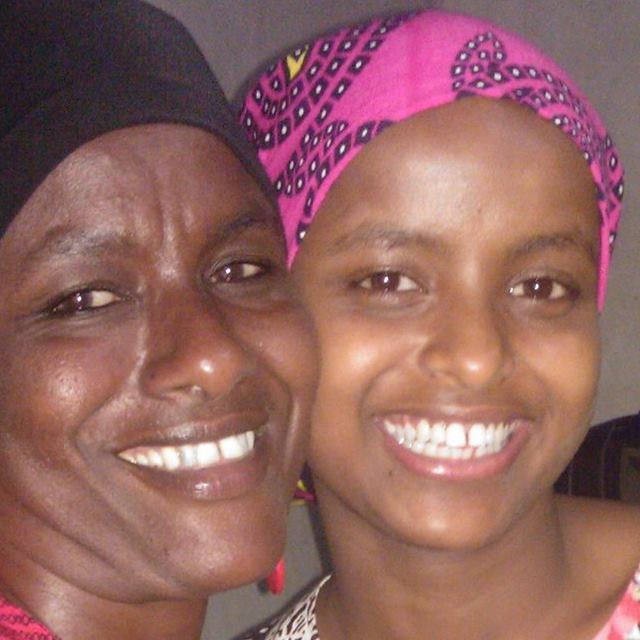
 Controversy surrounds the veil and robe Islamic women don as a sign of modesty. While some men say it turns them on, France tried to ban it from its institutions of learning. In countries like Kenya, accusations abound that this dress, referred to as buibui and hijab in Kiswahili and Arabic, respectively, is used as a cover up for evil by some criminals. BOBASTLES OWINO NONDI finds out what the hijab is from the women who wear it.
Fatuma Mohamed, 28
What exactly is the hijab and why do women wear it?
The hijab is an Islamic attire for adult women. I have been donning it for seven years. I just can’t do without it as I would feel naked in public. A woman’s nakedness is in her hair, and hence it should be covered. Wearing long dresses and the head covering are important as they not only protect men from sexual temptation but also bring honour to one’s father or husband. A man is honoured when his wife or daughter wears long skirts or buibui and a head scarf.
It is claimed that men are the ones who have imposed the hijab on women. Should women stop wearing it?
Asking women not to wear the hijab is like denying a breast-feeding child the mother’s breast.
Fatma Abdillahi Mbaruk, 19
It is part of my religion and culture that brings honour to the wearer. I don’t want to tempt men.
A girl should start covering her body at puberty as this is the time her body organs and parts are starting to form.
Have you ever faced discrimination of any sort as a result of your wearing the hijab?
I was once denied a place in a film project at college for refusing to use costumes that I felt were exposing a lot of my body. Some people just lack the confidence to socialise with a woman in a hijab.
Some people have disguised themselves as women in the hijab to carry out evil schemes. What do you say about that?
It is not just men but some prostitutes also don this garb and thus spoil the name of Islam. Those people know that a person in a hijab is assumed to be God-fearing and therefore beyond suspicion.
What is the future of the hijab?
Our generation has to do a lot in order to maintain this culture. I am sure the wearing of the hijab will continue.
Amina Hirji Mohamed, 21
When did you start wearing the hijab and why?
I started wearing it when I was about seven years old. This is the age at which I started being taught the values of Islam. I have been wearing it to cover my body parts from men who are not members of my family so that I may not subject them to temptation.
 So, at that tender age, you were already a temptation to men?
It is not so, but we have cases where men rape girls at the age of two years. So if the hijab can protect me from such temptations, then it does not matter how young I am when I start wearing it.
Is wearing of the hijab a question of religion, culture or safety?
I can say that all of the above. But I must say that it is based on culture and religion. The hijab is the symbol of a Muslim woman, regardless of one’s tribe or race.
But now you are just wearing a pair of Jeans trousers and a blouse with the only symbol of Islam being the scarf on your head. What does this mean?
I am still well covered from toe to the head and therefore I am not posing any temptation to any one. Like any culture, the hijab is evolving. Older women may find it very comfortable wearing Habaya, a heavy fabric with a slit at the centre, and this may not come out well with younger girls. That is why trousers have come on the scene. Various Muslims wear all types of clothes as long as they do not expose the erotic parts of their body. While some are in complete buibui with only their eyes open, others have scarves on their hair; like I am now. The hijab should not be transparent; should not be tight to show body curves; should not be so light that it gets blown about by the wind or cling to the body; it should always cover the hair and most parts of the arms and legs.
Have you faced any form of discrimination as a result of wearing the hijab?
I was denied a job. After going through a job interview I thought I had done so well. I was asked if I could wear other clothes that do not appear Islamic if given the job and I said no. I never heard from them again.
What would happen if a Muslim woman walked out without the hijab?
It is not obligatory! Most people wear it of their own volition as it brings personal rewards such as respect to the person wearing it. It is a shame to Islam if a girl walks about in something that exposes her body. But I believe even those Muslim women who don’t wear the hijab still cover their bodies appropriately.
Why do you think some people are opposed to it?
Someone is seeking to take advantage of women. Why would anyone want women to uncover their bodies? Those who are opposed to it should first address the issue of nudity along the streets before they can turn to fully covered women.
 Asha Khamisi, 22
When did you start wearing the hijab?
In kindergarten. My parents used to cover me before going to school. Later when I joined madras, I felt it was the way as every one used to wear it. I also liked to imitate my mother who is always in the hijab.
What is the history of the hijab?
The Quran says that a woman should not expose her body. We are taught that even a show of one’s hair would subject her to harsh judgment by God.
How do you feel without it?
I am rarely without it because I feel naked. If I walk out with my hair uncovered I just condemned by God which is not a good feeling.
But not all Muslim women wear it?
No. This is because perhaps it was not emphasised during their childhood or their parents are not strict followers of the teachings of the Quran. But nobody forces you to wear it. It depends on one’s background and environment.
Can you please explain the various types of the hijab?
Some women cover themselves because they are of Swahili or Arabic origin and may not even be Muslims. Some try to blend it with what is fashionable in order to fit in. I think these two categories would just cover themselves in anything, in any colour. Some of these dresses ironically attract attention contrary to the purpose of the hijab, which is to distract people’s attention. I think those that are strictly following the religious teachings wear black, heavy hijabs.
What are the inhibitions that you have to grapple with while in the hijab?
You may feel talented as a musician, media person or actress but you can’t do some of these things while in the hijab. This is why some media people – especially TV – opt to put down the hijab in order to pursue their dream.
There was a time when my Christian boyfriend would not want to go out with me while in the hijab because, he said, “I do not look sexy in it”. Again he would complain over my wasting his money on hairdos and then covering it under the hijab. You also don’t get some jobs unless you are able to wear clothes other than the buibui and the head cloth.
How are the prevailing cultural dynamics affecting hijab?
While some Muslim men wear European suits, women don clothes that glitter and attract more attention than if they wore a skirt and blouse.
Does the hijab have a future in Kenya?
Parents need to take their kids to Madras at an appropriate age, read Quran and adhere to the teachings, and lead by example. That way we can be sure that the hijab would have a future.
What would you say about those people who wear the hijab and do socially bad activities, or criminal activities?
It is very wrong to do anything bad in godly attire.
What would you say about people who are opposed to the hijab?
The hijab is a religious wear and can only be done away with when the religion dies out. It does not hurt anybody when I am wearing the hijab. It can only hurt when I am wearing dresses that expose my sensitive parts. It is like all of a sudden telling men to stop wearing long trousers or shorts and instead wear skirts and dresses. The hijab is here to stay.
Amina Ibrahim, 23
There was a message to Prophet Mohamed from God, directing him to cover himself at the place where he had gone for a retreat. Again the same message came for women who were on a retreat, directing them not to go out of that place unless and until they are fully covered.
Why is it that you only cover yourselves to outsiders (non-blood relatives) but are free with those that are too close to marry you?
Your brother or father is not expected to be attracted to you romantically. Therefore you do not sin by letting them see part of your body. We believe that if you make someone to admire you, you are already a sinner.
 Does that mean that a woman in the hijab would get fewer proposals compared to that who is not fully covered?
When you are in the hijab people regard you with a lot of respect. So even if the people who approach you for an affair are the same in number, you find that those for the woman in the hijab are much more respectable and even more serious in their quest than those for the scantily dressed woman. But it is sinful to induce a man to lust after you. Some people do not have the deep meaning of the teaching of the Quran, or by choice have just decided to go against them. Some are simply influenced by their environment or the pressure to fit in with their peers. But I am sure it is the hijab that makes the difference between a Muslim and non-Muslim woman.
Have you ever faced discrimination for wearing the hijab?
No. If we are in a crowd and some people wanted to do something that they think would offend me, they excuse themselves first before they engage in it. This confirms that this type of dressing is really respected. Again there are some times when you are judged harshly by your peers simply because you are a Muslim and wearing the hijab. That is mainly when there are stories of hostilities between Muslims and Christians or any acts of terror or jihad.
But some people are known to have done wrong things while in the hijab.
Such people should be treated like isolated cases, and not used to rudely judge the hijab.
Do you see any threat to the hijab?
Yes. One of the threats is the people who use it in doing anti-social activities. Then there are the cultural changes that bring in various dressing fashions. It is not uncommon to find a Muslim girl wearing hipsters, pedal pushers or any form of Jeans trousers with a head covering as the only thing close to Islam. Those things are threatening the future of the hijab.
How can its future be guaranteed?
Girls should not see the hijab as a burden. Parents should also start teaching their children the importance of hijab. But remember this is a religious issue and therefore cannot just be wished away because it is not going to go away.
Would you say that those people opposed to it are opposed to Islam?
Precisely! I can’t think of any other reason why someone would be opposed to women covering themselves. Hijab does not stop a woman from doing anything, in fact, everything depending on place and time and the person. And that is simple self-respect. If someone would want to erode that self-respect, then the person is simply advocating for a rotten society, which our faith shall always stand against.
Zainabu Faizal Sanaipei, 23
Why do you wear the hijab?
Under the rules and regulations of Islam, a woman must cover her body. I also find myself very safe because many people fear people in hijab.
How many different types of hijab are there?
Hijab is any type of cloth, which isn’t transparent and covers the whole body. This includes bui bui covering the body, jilbab or nikab covering the face, kitikuf covering from neck to waist, and the headscarf. All these could be referred to as sitar (kujisitiri) or keeping yourself modest. So the type of material or the style that makes your headscarf, buibui or nikab is a matter of choice and what is available to you. It is not a question of different types. But the hijab must always not be of light material or transparent.
Would you say fashion is taking any toll on the hijab?
Certainly. Most women, young and old, also want to move with fashion. That is why you find some transparent materials being used as hijab. Others simple don’t wear it at all.
Are there any inhibitions, restrictions or discriminations that come with wearing hijab?
Discrimination, no! You can’t do some things while in the hijab, for example, drinking in a pub, clubbing and such like things. Again it must not expose your body structure.
Is there a statement that is expected to come out when one wears the hijab?
When a person is in the hijab you can easily place her both culturally and religiously. You know Muslim women are very religious, very respectful and are taught to very submissive and the wearing of hijab is a clear statement that these things are not only said or read, but are practised by these women.
Why do you think some people are opposed to it?
The hijab creates a terminal curiosity among people and therefore they can really push for an opportunity to see what these women cover under their heavy clothing. Again it is a question of fashion. Until very recently, the fashion marketers were not able to access Muslim community and this was very hurting to them.