
By Fred Mbogo
Published October 25, 2013
 In the drama that is Kenyan politics, the church, through its clergy, has not been left out. Colourful characters have stood on the pulpit to bless, pray with, or sometimes outrightly accuse politicians of all manner of ills. The clergy and politicians have always had a tenuous relationship; each benefiting from the other, or tearing into the turf of the other.
The church, whether Roman Catholic, Anglican, Presbyterian or any of the rapidly sprouting charismatic versions, has had power through its organisational capacity to provide health and education through its many anti-poverty programmes. This has seeped into people’s ways of life so that even cultural productions have at times been crafted with the church.’s sensitivities in mind.
The church has had a more efficient manner of organising its dealings with its congregants. For that reason it has flourished in terms of attracting more and more people into its ranks. That capacity to have the masses on its side has made it a power-giving machine. Politicians must feel threatened if not envious of the church, then. How do they put checks and balances on the seducing power that the church has? Indeed, if the church wanted to, it could change the course of Kenya’s history. It could challenge the government and make it accountable for every course of action it takes.
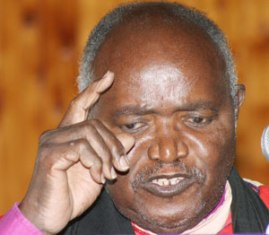
In the history of Kenya’s church-and-state political engagements, perhaps the most recognisable voice of protest from the clergy has been that of Anglican Church’ David Gitari, who passed on in October 2013. The Rev Dr Gitari served the church in a career spanning four decades, rising to the post of Archbishop by the time he went into retirement.
Dr Gitari thought of the church as a space where congregants could be conscientized on their spiritual lives and most importantly also their civil and human rights. So he spoke truthfully to the powers-that-be from his pulpit. He opposed President Daniel arap Moi and Kenya African National Union (KANU)’s unpopular queue-voting system and joined forces with the so called Young Turks in the clamour for multiparty politics in Kenya. He fought tooth and nail towards the realisation of a new constitution for Kenya. His was an example of how the clergy should engage with the powers-that-be; fearlessly, selflessly and constructively.
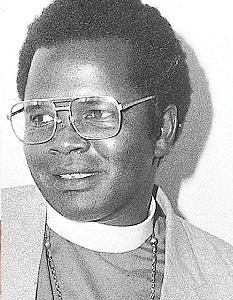
But Gitari’s wasn’t the only voice from the clergy. Names like Alexander Muge, Henry Okullu, Manasses Kuria, Raphael Ndingi Mwana a’Nzeki and Timothy Njoya are part of that clique of Kenya’s clergy that were and have been at the forefront of political change in the country, especially against the perceived autocracy under President Moi in the 1980s and 1990s.
Others, like Father Anthony Kaiser, who has been immortalised in Bob Nyanja’s film, THE RUGGED PRIEST, worked towards bringing to light the lies that political leaders peddled to their electorate. These members of the clergy worked in dangerous times. While Muge and Fr Kaiser paid the ultimate price for involving themselves in that thankless task of speaking truth to power, Dr Njoya received a beating whose still photographs and video footage have come to be discussed as capturing just a slice of the brutality served on those seeking to fight tyranny.
“If there was one thing that seemed to irk the bishop,” Waithaka Waihenya and Fr Ndikaru Wa Teresia write in the biography of Roman Catholic Archbishop Ndingi Mwana a’Nzeki, “it was keeping mum when things were not right. He expected his Church to be at the forefront of justice and peace issues and he was not ashamed of taking up his role.”
Archbishop Ndingi was particularly vocal after the so-called tribal clashes in the Rift Valley that affected several districts including Nakuru, Uasin Gishu and Trans Nzoia in 1992. Unfortunately, despite his agitation and campaign for peace, the trend for these ‘tribal’ clashes was set so that they returned to haunt the residents of the Rift Valley at the beginning of a general election, i.e. every five years.
 The decline of the church’s voice as an agitation tool for the masses in politics seems to have followed that of the civil society. There was a mellowing of political rapport after Mwai Kibaki came to power as President in December 2002. Many members of the civil society and the church found themselves in politics and government. Once there, they appeared to drop their vigilance as watch dogs. With this laxity came the ills that led to the chasm that split the country along tribal lines in 2005 and then led to the post-2007 electoral violence over a disputed presidential poll. The church, by then, had lost its impartiality, objectivity and clarity of issues after having taken sides. It had failed to provide leadership on such matters as constitutional change and mega-corruption cases that were ongoing at the time.
One can only hope that the church shall redeem itself and take its rightful position in leading the faithful in sifting through the various governance challenges. The clergy must desist from being dazzled by promises of a heavenly earth for themselves from politicians.


