
By Human Rights Watch Press
Published February 20, 2014

The government of Ethiopia should halt any development of sugar plantations and the water offtakes in the River Omo valley until affected indigenous communities have been properly consulted and have given their free, prior, and informed consent.
Even then, Human Rights Watch and International Rivers–in a report released in Nairobi, Kenya, on February 19, 2014–urge the Ethiopian government against proceeding with its development plans without assessing their impact on the livelihood of the people of the Lower Omo Valley/Lake Turkana basin.
According to Human Rights Watch, new satellite images “show extensive clearance of land used by indigenous groups to make way for state-run sugar plantations in Ethiopia’s Lower Omo Valley…without adequate consultation or compensation.”
 The land clearing, Human Rights Watch and International Rivers say, is part of a broader Ethiopian government development scheme in the Omo Valley, a United Nations Educational, Scientific and Cultural Organization (UNESCO) World Heritage Site, including dam construction, sugar plantations, and commercial agriculture. The project will consume a large amount of water in the Omo River basin, potentially devastating the livelihoods of an estimated 500,000 indigenous people in Ethiopia and neighboring Kenya who rely on the Omo’s waters for their livelihoods.
“Ethiopia can develop its land and resources but it shouldn’t run roughshod over the rights of its indigenous communities,” says Leslie Lefkow, deputy Africa director at Human Rights Watch. “The people who rely on the land for their livelihoods have the right to compensation.”
A prerequisite to the government’s development plans for the Lower Omo Valley is the relocation of 150,000 indigenous people who live in the vicinity of the sugar plantations into permanent sedentary villages under the government’s deeply unpopular “villagization†programme.
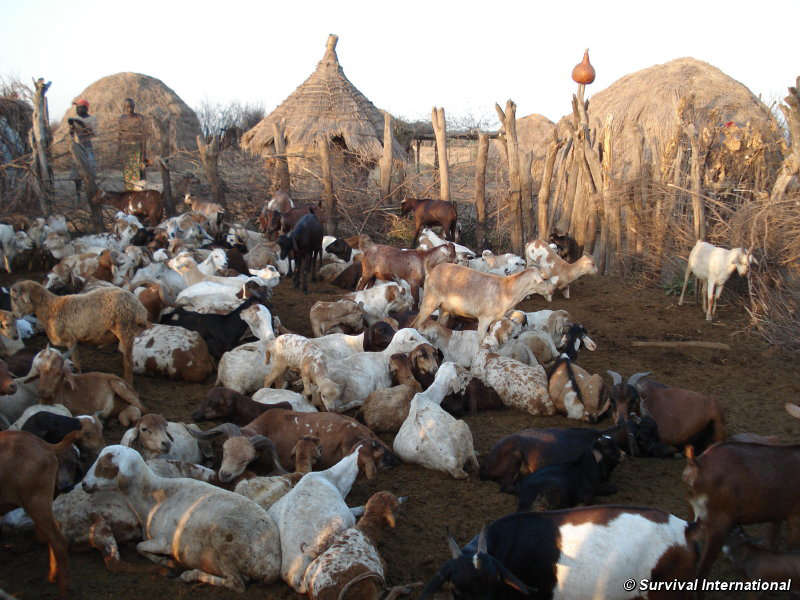
Satellite images, according to Human Rights Watch and International Rivers, show devastating changes to the Lower Omo Valley between November 2010 and January 2013, with large areas originally used for grazing cleared of all vegetation and new roads and irrigation canals crisscrossing the valley. Lands critical for the livelihoods of the agro-pastoralist Bodi and Mursi peoples have been cleared for the sugar plantations.
The development in the Lower Omo Valley depends on the construction upstream of a much larger hydropower dam – the Gibe III, which will regulate river flows to support year-round commercial agriculture.
A new film produced by International Rivers, A Cascade of Development on the Omo River, reveals how and why the Gibe III will cause hydrological havoc on both sides of the Kenya-Ethiopia border. Most significantly, the changes in river flow caused by the dam and associated irrigated plantations could cause a huge drop in the water levels of Lake Turkana, the world’s largest desert lake and another UNESCO World Heritage site.
Lake Turkana receives 90% of its water from the Omo River and is projected to drop by about two metres during the initial filling up of the dam, which is estimated to begin around May 2014. If current plans to create new plantations continue to move forward, the lake could drop as much as 16-22 metres. The average depth of the lake is just 31 metres.
The river flow past the Gibe III will be almost completely blocked beginning in 2014. According to government documents, it will take up to three years to fill the reservoir, during which time the Omo River’s annual flow could drop by as much as 70%. After this initial shock, regular dam operations will further devastate ecosystems and local livelihoods. Changes to the river’s flooding regime will harm agricultural yields, prevent the replenishment of important grazing areas, and reduce fish populations, all critical resources for livelihoods of certain indigenous groups.


