
By Human Rights Watch Press
Published December 14, 2014
 The International Criminal Court (ICC)’s action to drop charges against President Uhuru Kenyatta of Kenya on December 5, 2014 sets back efforts to end the country’s entrenched culture of impunity.
“It’s clear that Kenya’s long tradition of impunity and pressure on witnesses have been serious obstacles to a fair process before the ICC,†said Elizabeth Evenson, senior international justice counsel at Human Rights Watch. “But these roadblocks make it all the more important for the ICC to assess how it can move ahead with high-profile cases against powerful people accused of serious crimes.”
RELATED: Play that Confronts Historical Injustice in Kenya Opens in Nairobi
“With the Kenyatta case closed, the scope of justice the ICC can deliver to Kenya’s victims is greatly reduced,” Evenson said.
ICC judges charged Kenyatta in January 2012 with crimes against humanity for his alleged role in organising and financing murder, displacement, and rape during Kenya’s 2007-2008 post-election violence. In early 2014, as a February trial date neared, the prosecution admitted its investigations had hit a dead end, including because a key insider witness had confessed to giving false testimony.
In March 2014, the judges had granted a temporary adjournment in the trial to permit the prosecution and the government of Kenya to work together to resolve a long-outstanding request for Kenyatta’s financial and other records, which the prosecution hoped could provide additional evidence. When the vast majority of records had still not been produced by October 2014, the prosecution asked the judges to refer Kenya to the ICC’s Assembly of States Parties for non-cooperation, and adjourn the case indefinitely until the government complied.
RELATED: Lifting the Lid on Rwandan Repression
The defense petitioned the judges to close the case. In two decisions on December 3, the judges found that further delay ‘particularly since the prosecution was uncertain whether even full cooperation by the government would lead to sufficient evidence’“ would be incompatible with the interests of justice. While the judges faulted Kenya for not complying with its obligations to assist the prosecution, they decided against any formal finding of non-cooperation, which could result in the ICC’s Assembly of States Parties deciding on what enforcement action to take on non-compliance.
“The judges made clear that Kenya’s inaction compromised the search for justice,†Evenson said. “The case should prompt serious discussion for future cases about what the court can do if the government of the country involved won’t cooperate.”
Pervasive witness interference and intimidation have dogged inquiries into the post-election violence in Kenya, and the ICC prosecution contended that an anti-ICC climate in Kenya was a factor in undermining its investigations against Kenyatta. The ICC prosecution has noted that, while it does not have evidence of direct intimidation, three trial witnesses withdrew due to security concerns, as did several witnesses who had agreed during pretrial proceedings to be part of the case. The prosecution has alleged that members of the Mungiki, a criminal gang it accused Kenyatta of soliciting to carry out attacks, have been killed or have disappeared.
RELATED: Ugandan and Burundian Soldiers in Somalia Accused of Sexual Abuse
 The ICC prosecution has also asserted that unidentified people attempted to persuade another three withdrawn witnesses to recant or withdraw, including by offering bribes, and that it would consider pressing charges.
Social media and blogs have been used to expose the identities of purported ICC witnesses. The first witness testifying in the Ruto and Sang trial, whose identity had not been disclosed publicly under ICC-ordered protective measures, was named on Twitter and blogs in Kenya. The ICC trial chamber termed this a deliberate attempt to intimidate the witness and warned that revealing the protected identity of a witness could lead to prosecution before the ICC.
RELATED: Religious Terror Threatens Zanzibar Island
In some cases, social media and blogs have exposed people to threats by erroneously branding them witnesses for the ICC against Kenyatta and Ruto, and have been used to spread hostility toward human rights defenders perceived to support the ICC process. Even though the Kenyan authorities know the identities of some of those behind the blogs, there were no apparent efforts to stop the threats.
 A Kenyan journalist, Walter Barasa, is wanted on an ICC arrest warrant for allegedly offering bribes to prosecution witnesses in the Ruto and Sang case on the basis of a “criminal scheme devised by a circle of officials within the Kenyan administration,†according to an ICC statement. On May 14, a Kenyan high court ordered Barasa arrested, but later that month a higher court suspended the order pending a decision on an appeal lodged by Barasa.
RELATED: Continental Court Could Perpetuate Impunity in Africa
Following separate defense allegations of intimidation and interference with its potential witnesses, the conduct of a prosecution witness in the Kenyatta case is under investigation.
“For the truth to be heard in court, witnesses must be able to come forward without fear of reprisal or harm,” Evenson said. “By failing to condemn or investigate threats against activists the Kenyan government has stoked a climate of hostility to derail prospects for justice before the ICC.”
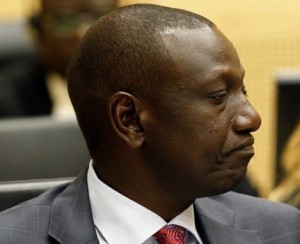 Kenyatta has appeared voluntarily before the ICC and promised to cooperate with the ICC after taking office in April 2013. But, once he was in office, his administration continued the previous government’s policy of dragging its feet on the prosecution’s requests for assistance.
RELATED: Ethiopia Should Drop Case Against Detained Bloggers and Journalists
Under Kenyatta the government also initiated an aggressive diplomatic campaign to lobby leaders, particularly within the African Union, to support ending the ICC’s cases, terming the ICC ‘the toy of declining imperial powers.’ This effort ignored the fact that both Kenyatta’s allies and Ruto helped to undermine earlier efforts to establish a tribunal in Kenya to prosecute the post-election violence, and, before the two men were summoned by the ICC, had called for the ICC to step in.
“The ICC only stepped in because Kenya’s politicians broke their promises time and again to deliver justice,” Evenson said. “Scores of Kenyan victims will be wondering who will right the massive wrongs they have suffered.”
 “The outcome in the Kenyatta case highlights some of the serious challenges the ICC still needs to address if it is to prosecute the world’s most horrendous crimes,” Evenson said.
RELATED: Uganda Urged to Provide Justice to Victims of Violence
Victims participating in the Kenyatta case had made clear through their lawyer that the end of this case would wholly destroy the realisation of their rights to truth, justice, and reparation. Victims of police shootings and of sexual violence committed during the post-election violence have filed two constitutional cases in the Kenyan high court seeking to compel the government to address these crimes.
Impunity has fuelled cycles of political violence in Kenya, with the people responsible for violence in 1992 and 1997 also escaping justice. Impunity remained a source of tension in the Rift Valley, the epicenter of the 2007-2008 violence, in advance of the March 2013 election, Human Rights Watch research shows.


