By Iminza Keboge
Published April 15, 2018
 A film on lesbian relationship set in Kenya has been selected for screening at International Festival du Film de Cannes in southern France in May 2018.
The 71st annual International Film Festival in Cannes that is scheduled May 8 – 19, 2018 has selected RAFIKI, a film written and directed by Wanuri Kahiu of Kenya and produced by Steven Markovitz of South Africa for its Un Certain Regard (In some Perspective) programme that shall showcase 15 films from around the world. RAFIKI, a co-production of South Africa’s Big World Cinema Production, Kenya’s Awali Entertainment, France’s MPM Film, Lebanon’s Schortcut Films, Norway’s Ape & Bjorn, Holland’s Rinkel Film and Germany’s Razor Film appears to be the only African production in this section that the Festival de Cannes screens runs films parallel to the official competition for the Palme d’Or.
RELATED:Film that Humanises Terrorists Screens in Nairobi
RAFIKI is set in the Kenyan capital, Nairobi, and revolves around two young women whose lives cross as their respective fathers set their eyes on occupying the seat of the local Member of Constituent Assembly (MCA) of their area.
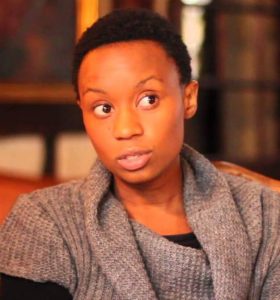 When Kena and Ziki ‘fall in love’ despite the ever-watching gaze of the neighborhood gossip and the homophobic sentiments of their community, Kahiu says, ‘the girls are forced to choose between what they feel and what others say.
Wanuri Kahiu says RAFIKI is inspired by Jambula Tree, a coming-of-age story about two girls in love that earned Monica Arac de Nyeko of Uganda the Caine Prize for African Writing in 2007.
“Making a film about two women in love, set in in Kenya, means challenging deep-rooted cynicism about same sex relationships among actors, crew, friends, and family,” Kahiu writes in the Director’s Statement. “Over the past five years of developing this script and project, we have seen worrying developments in the anti-LGBTI climate in East Africa.”
RELATED:Film that Humanises Terrorists Screens in Nairobi
 Markovitz, who produced RAFIKI, is reported to have experience spanning more than two decades producing short and full length fiction and documentary films and in distribution and festival management. He is said to have co-founded Big World Cinema in 1994 and Encounters South African International Documentary Festival in 1999. He is reported to have established Electric South to produce Virtual Reality and a distribution arm called African Screen Network.
RELATED:Facebook Waffles, Ducks and Runs Away as BBC Grabs ‘Fake News’ by the Throat