By ARC Music
Published July 12, 2022
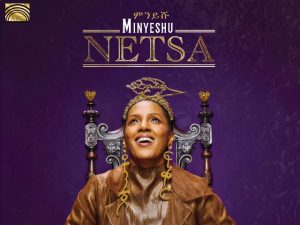 Netsa is the latest album from Ethiopian virtuoso Minyeshu Kifle Tedla and sees its release on August 26, 2022. Following her acclaimed 2018 album Daa Dee, Netsa – meaning ‘free’ in Amharic – could well be considered the culmination of Minyeshu’s creative voyage, at least so far.
Like much of the world, 2020 gave Minyeshu pause for contemplation. There was one resounding answer for every question she asked herself: music. While music has given her so much, and she to music, theirs could be considered a symbiotic relationship, for they very much exist in one another. Music is a part of her, her heritage, and her heart. Minyeshu repays this blessing by sharing her talent with the world, and Netsa is her latest gift.
RELATED: Sub-Sahara Africa Music Revenues Grow
Netsa is a collection of songs that explore themes of unity, love, exploring oneself and the natural world and appreciating the beauty in all of them. The opening track Fidel (meaning alphabet) bounces with youthful exuberance and features the intriguing sound of the chechezeya, one of Ethiopia’s most mystical traditional instruments. In contrast, the gentle tones of Qulef (The Key) and the haunting melody of the balladesque Fiker (Love) slow the tempo and allow for reflection. The album bursts back to life, with most songs having a high-energy, celebratory feel. Bold beats are prominent throughout, with Qhakaza Thando (Shine Up Love) evoking an almost reggae feel alongside its clearer jazz and ethnic inspirations.
The first track, Fidel (Alphabet), begins with the unique, mystical sound of the chechezeya. This very traditional instrument, found in the north and south of Ethiopia, was recorded live by Minyeshu’s guitarist, Donnie DuVall, at a rural festival over a decade ago. Its intriguing sound pulls you in as Minyeshu reflects on the childhood games she used to play with her friends. One of her favourites being Sidest korki, a simple game played with home-made objects found around the house. “You don’t see these basic games being played anymore, for example, my daughter is half Dutch so she missed out on experiencing a childhood like this, so I like to sing about these memories to keep them alive. Fidel is about when you are four, five, six… at that age you are energetic, full of power and excitement – this track embodies this youthfulness.”
RELATED: African Scholar Marries Humanities with Sciences for Holistic Development
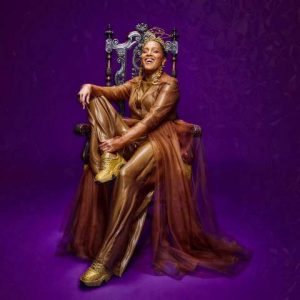 The tempo drops with Qulef (The Key), a soft, gentle and jazzy dedication to love and unity – how a lover can hold the key to our hearts, our homes. “When you lock something with a key, there is an element of unity, both parts are locked together as one. Likewise, when you have a house, it is built from separate parts which are then locked together – click, click, click, and together they make a home.”
This essence of unity and connection with others, either nearby or afar, is carried through into Yene Africa (My Africa), where we are honoured with the harmonic vocals of Afrika Mamas. One of Minyeshu’s long-life aspirations was to work with artists from all over the world, so her dream came true when a mutual friend brought their paths together. While Afrika Mamas were doing a radio inter-view in the neighbouring city of Venlo, Minyeshu offered to meet them and bring them to the stu-dio. “On the way, I told them about the song and my idea; we started singing right away so by the time we arrived at the studio we were ready to go. None of us knew what the outcome would be, we just gave it a go.”
RELATED: All Africa Photographic Competition Interrogates Health and Wellness
Qhakaza Thando (Shine Up Love) features one of the Amharic pentatonic scales called Tezeta (meaning ‘memory’ or ‘nostaligia’), which is often used in ethnic music and modal jazz improvisa-tion for its emotional impact on the listener. Minyeshu felt she could take this one step further by combining this tezeta scale with Afrika Mamas’ exhilarating vocals. “We tried it on the bus and they just started crying, it immediately touched their souls.”
Fiker (Love) has a ballad-like feel to it, with a catchy yet almost haunting melodic trance building throughout. It touches on how unconditional love forms a big part of who you become. “For me, there are three things that come to mind when I think of unconditional love: my country – Ethiopia, my mother and my daughter. Those three form who I am today. Your birth place, your culture, your upbringing – they are all the foundations of your life. Your mother is the person who raised you, so of course she also helps form who you are. And your children can change you, as you adapt to a new way of life becoming a parent yourself.”
RELATED:Study Retraces Kenya’s Contemporary Art Movement
 Not only does she devote songs to the love and unity of the people around her, Minyeshu also pays homage to the natural world. With Ethio yo yo Pia, Abay (The Blue Nile) and Erta Ale, she recognises the beauty within the world around us and the powerful effect Mother Earth can have upon humanity.
“Ethiopia is my heritage; my roots are still a big part of me, wherever I go. And Abay, the river, is like a person to me because it’s so powerful – it’s a magical place. During the last couple of years, I have gone deep within myself and connected on another level with the universe. I really love the volcano Erta Ale, it is in the North East, it means a lot to me. I dream to one day to walk barefoot on the volcano itself!”
The album comes to a close with Getee (My Jewel), Minyeshu explains, “With a cherished piece of jewellery, such as wedding ring, you don’t just take it off one day and replace it with another. It is too important; it means too much. This song is for my other half – the love of my life – he makes me feel this way – proud, special – he is my crown jewel.”
It is hard to deny that ‘Netsa’ comes from a place of self-awareness, appreciation andenlightenment. The result is a beautifully-crafted album touching on Minyeshu’s life’s journey so far – a reflection on what has been and how she would like to shine her light going forward. As Minyeshu explains, “It highlights how we should see the world with positivity, the sun is still shining and nature is still nourishing us. People are still free and able to reach out and connect with each other with their hearts, minds and souls, even when they’re geographically distanced.”
RELATED: Art and Craft Dealers Call for Help as Kenya’s Travel and Tourism Sector Loses 5-Star Hotels
Born in the Ethiopian city of Dire Dawa, Minyeshu’s family relocated to the capital, Addis Ababa, when she was still a child. Aged fourteen, she attended her first live concert. This event fully ignited a passion for the performing arts and set her on a path of creative expression, entertainment and exploration. Just a few years later, she joined the Ethiopian National Theatre, where her natural talents were enhanced by sharing learning experiences with like-minded souls and expressing their dedication to the rich traditions of Ethiopian culture through the artistry of music, song and dance. Through her studies, she unearthed deep inspiration from her homeland and discovered composer Mulatu Astatke – the father of Ethio-jazz. His indelible influence can often be felt throughout many of Minyeshu’s works. With her studies complete, her thirst for new experiences took Minyeshu to Europe, living in Belgium before eventually settling in the Netherlands.
Her personal growth was matched professionally as she carved out a career as a performer, gaining recognition as an actor, producer, dancer, choreographer and perhaps most relevantly, a singer. Her travels have undoubtedly helped her musical style evolve, as she delicately blends worldwide influences with her Ethiopian heritage to produce distinct and stirring sounds, evocative and impressive in equal measure. Her considerable talent has led Minyeshu to release four acclaimed albums, with Netsa the eagerly awaited fifth. All significant milestones on Minyeshu’s musical journey.
RELATED: Endurance Sport Invites Participants to the Magical Indian Ocean Coast
By blending spirited vocals, worldwide influences and instruments such as keys, drums, bass, violin and piano with traditional sounds of the masenqo, washint, kirar, and the captivating chechezeya, Minyeshu has created a vivid, vibrant and ultimately uplifting listening experience. An experience that is sure to set you free.