 Only half of Africans believe ordinary people can obtain justice through the courts.
RELATED: Why Kenyans Are Cynical About Their Judiciary
A survey by Afrobarometer, a pan-African survey research network that provides data on African experiences and evaluations of democracy, governance and quality of life, in 2024/2025 shows that many Africans see the justice system as unequal, costly and slow.
Majorities across 38 African countries say people are frequently treated unequally under the law, and almost half think powerful individuals who break the law get off too lightly. Fewer than half of citizens believe they could afford legal assistance or court costs if needed.
RELATED: Law Ministers and Attorneys-General to discuss Barriers to Access to Justice
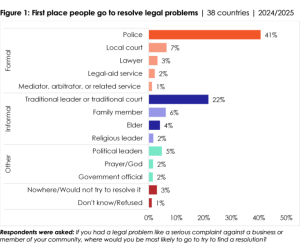
 The new report, based on 50,961 interviews, shows that about one-quarter of respondents prefer traditional leaders, traditional courts or elders to the formal justice system.
Across 38 countries, 26% of respondents would go first to traditional leaders, traditional courts or elders as their first point of contact for resolving legal problems.
RELATED: Judiciary Yet to Redeem Its Tarnished Public Image
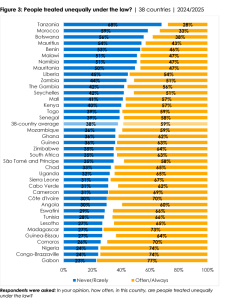
A majority (59%) of Africans believe people are “often” or “always” treated unequally under the law.
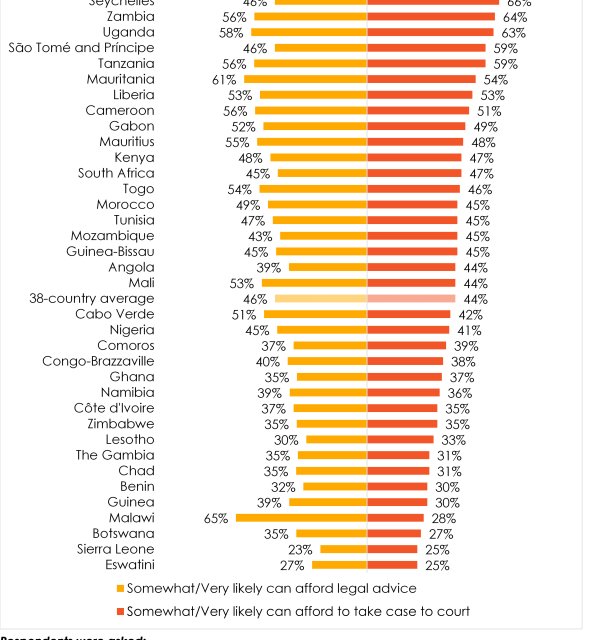
Only 46% think they could afford legal assistance, and just 44% believe they could afford court costs.
Almost half (48%) of respondents say the powerful get off too lightly, while only 13% say the same is true for ordinary people.
RELATED: Manage, Don’t Fear, Ebola Disease