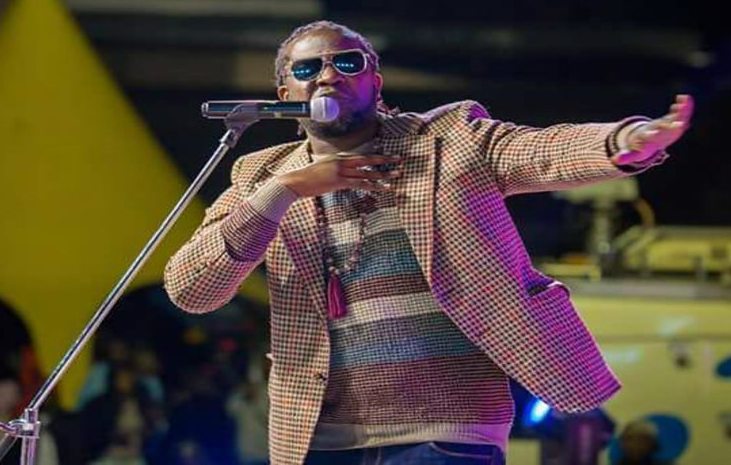
By Ogova Ondego
Published 2002
 With 22 well selling albums, Sammy Muraya is today one of the leading benga musicians in Kenya. But things have not always been smooth for this Subukia-born composer/vocalist/guitarist. He dropped out of Form One to the chagrin of his parents 22 years ago to venture in the entertainment industry.
Compared to academics, music recording appeared to have little prospect to the young Muraya’s parents whose opposition could not be said to have been misplaced. However Muraya’s determination finally won his mother’s favour to the extent she bought him a guitar he used in his maiden single recording, Kanyoni Kanja, in 1979. His fast-paced guitar wizardry, coupled with social commentary, readily connected with fans who swarmed to his gigs. But it was not until 11 years later that he had a major breakthrough with Mama Kiwinya which sold over 50 000 copies and enabled Muraya to enter the annals of Kenyan music greats.
RELATED: Art Group Empowers Women Economically while Helping Preserve Traditional Knowledge and Skills
The album, which lamented the plight of young, inexperienced men at the hands of sugar mummies, Muraya says, is still selling well a decade later. He says showbiz is a career replete with pleasure and leisure which can easily mislead a less discerning artiste to the extent of wining, dining and laying women at the expense of one’s future. The temptation to indulge is great but one must learn how to resist it.
Looking at him over the two decades he has been in the entertainment arena, one cannot help noticing that he has followed his advice well. He is married to Nelly Wambui with whom he has three children-Wilfred Wawire, Patrick Mwangi, and Pius Ngure-whom he performs with. Living and recording in a nation rampant with piracy, Muraya appears to have done well for himself. He owns a plot in Nairobi on which he has built a large permanent house and drives a Volvo station wagon which could make some professionals green with envy.
RELATED: From Bureaucrat to Fashion Designer
 Muraya, however, has two regrets. The first is his inability to complete school which, he says, is hindering his career. “Composing music in English and Kiswahili does not come as easily as in Kikuyu because of my limited education, ” he says. If he had it to do over again, he says, he would never drop out of school for whatever reason. Another regret is his having been tricked by a friend to go to Britain where he had been made to believe that he could get quicker and easier riches from his music. Instead, he says, the one year sojourn in the Queen’s land has only adversely affected his health and he has to regularly see doctors.
RELATED: Drawing Saves School Girl from Committing Suicide
Over the past five months, for instance, he has not worked as he has been ailing with pneumonia he says he picked while packing milk in Britain at zero degree Celsius. No sooner had Muraya arrived in Britain than he recorded an album, Bye Bye Kenya, as a celebration of his journey from poverty to riches. But perhaps the celebration was a little too fast, as he soon found out. “People in Britain are too busy for entertainment and so I found myself not doing anything,” he says. To support his family, Muraya settled to manual work putting in 10 hours in milk packing and a further four in sorting mail at a postal facility. What he earned was barely enough to pay rent and buy food.
Disillusioned, the poetic Muraya recorded Take Me Back Home album and was on the next available flight to Nairobi. But without his family whom he left behind for six months due to inablity to pay for their tickets. It was proceeds from his music sold in Kenya-not Britain- that enabled him to bring the family home. The now wiser Muraya says any artiste wishing to work abroad should first send one’s music there to gauge its popularity before going there in person. He says at appoximately Sh300 per head charged at concerts in Britain, one can make more money locally and that there is no need to go overseas. Muraya was ranked second in the KBC Benga Music Extravaganza held in December 2000 although he is yet to be paid his Sh50 000 two years later